Blog
Maze types, solving methods, classroom worksheets, and the algorithms behind each puzzle.
Categories
All categoriesMaze Basics
Get to know maze types, compare shapes, and choose a puzzle size that fits.
6 articles
Kids & Classrooms
Find age-appropriate worksheets, plan themed activities, and help a stuck learner.
6 articles
Solving Mazes
Start with practical solving methods, explore algorithms, and try a tougher puzzle.
6 articles
Making Mazes
Draw a maze by hand, learn how generators work, or turn a plan into a physical build.
6 articles
History & Culture
Explore labyrinths, ancient stories, famous places, mirror mazes, and arcade design.
6 articles
Latest guide
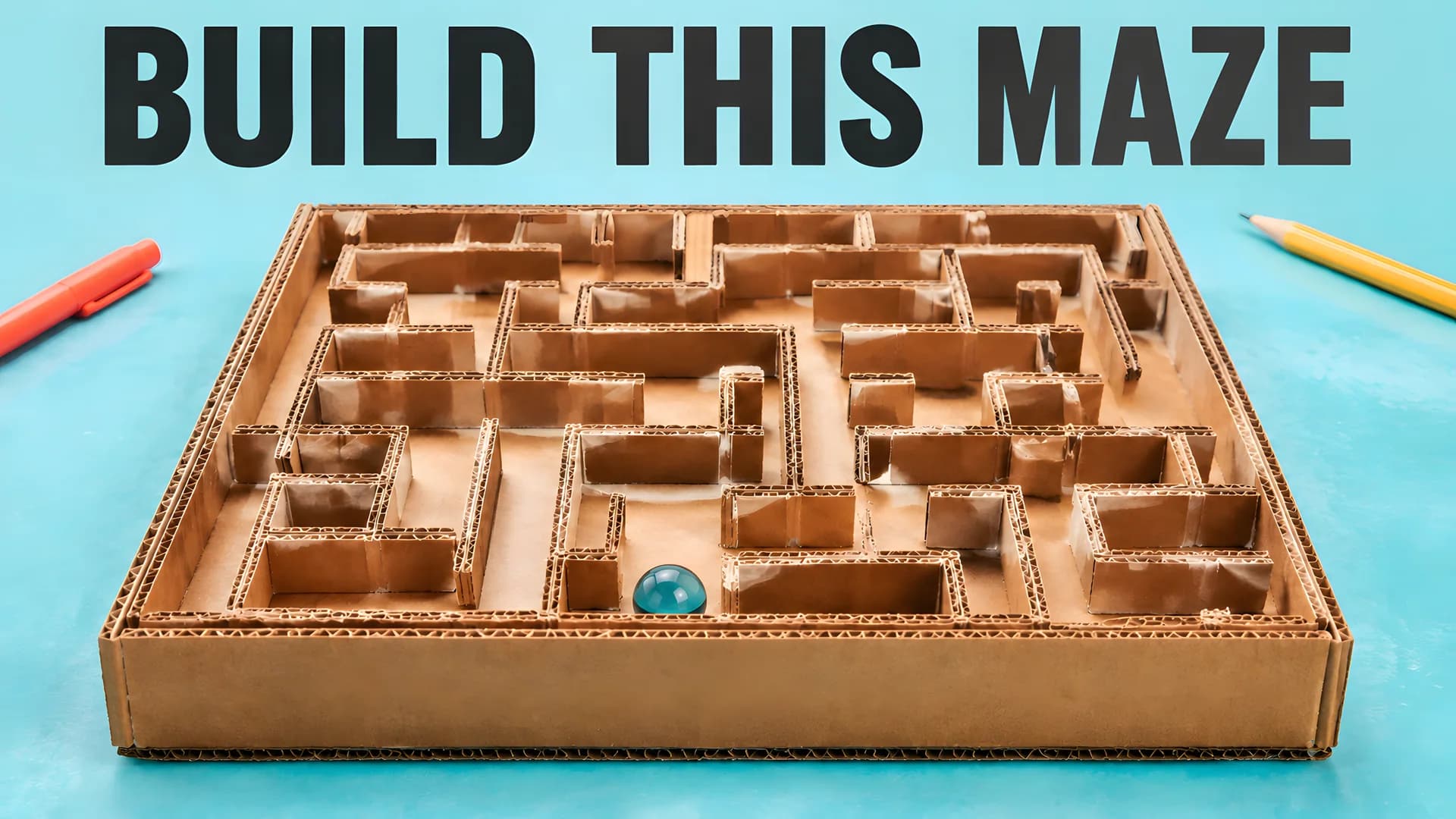
DIY Cardboard Marble Maze
Build a tilt-to-play cardboard marble maze with a measured wall plan, clear construction steps, testing checks, and a paper-plate variation.
Making Mazes
Popular guides
Good starting points if you are new to printable mazes.
All articles
30 articles in the archive
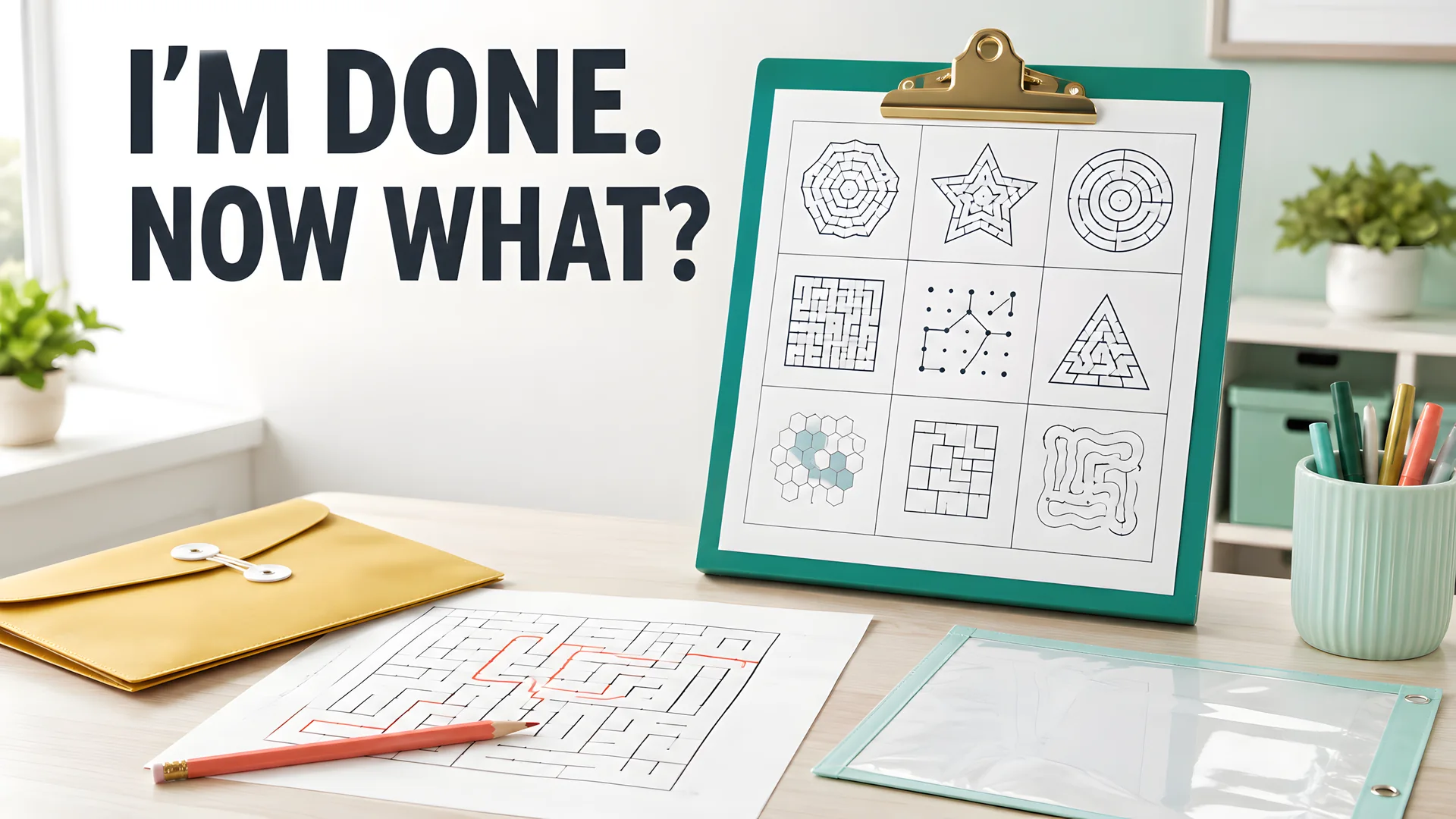
Early Finisher Activities
Give early finishers nine quiet maze tasks they can choose and check on their own. Includes a choice board, four puzzle pages, and answer keys.
Kids & Classrooms
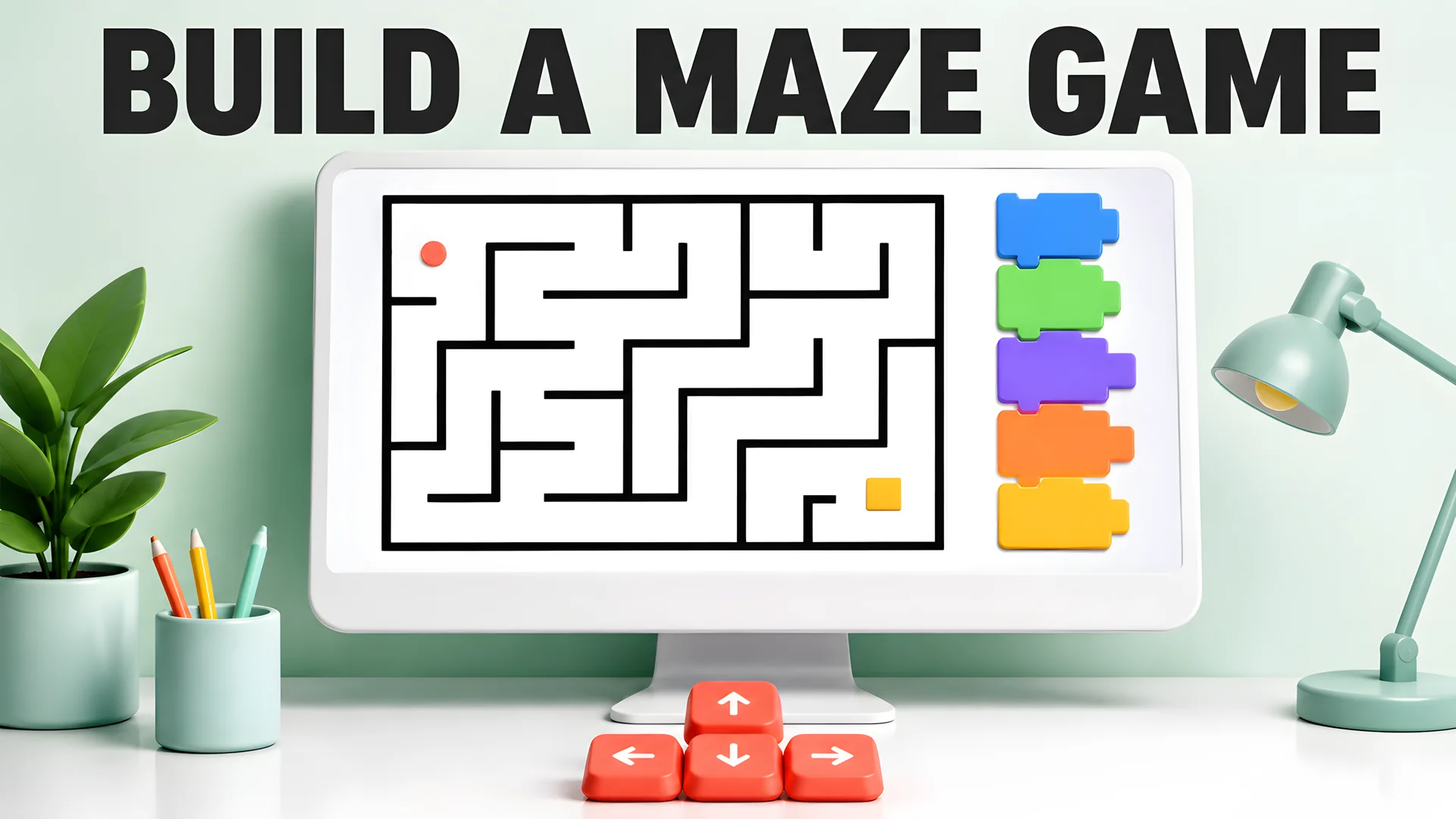
How to Make a Maze in Scratch?
Build a Scratch maze with arrow-key movement, wall collision resets, and a goal that triggers once. Includes precise scripts and debugging checks.
Making Mazes
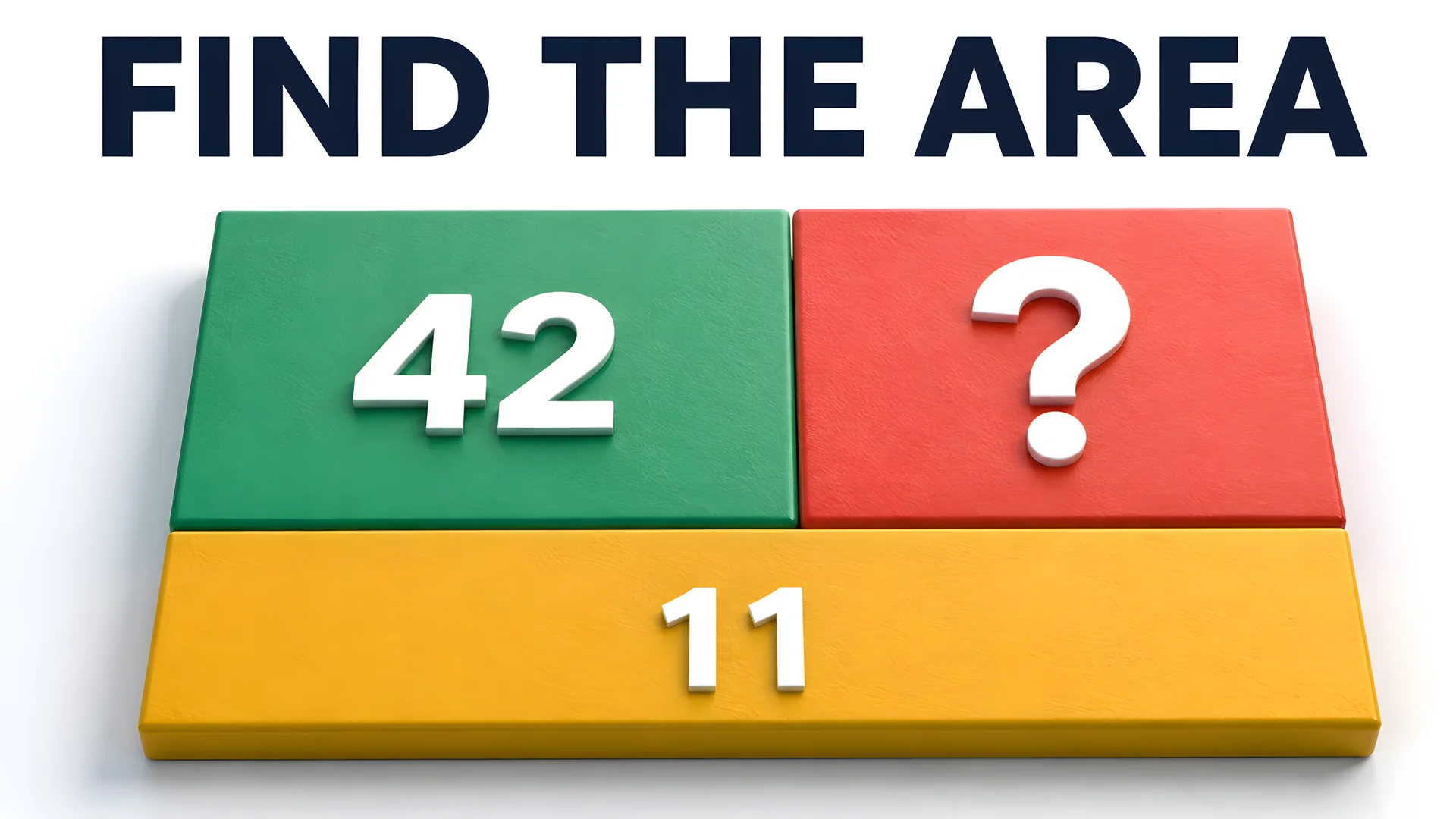
How to Solve Area Mazes?
Solve area mazes with shared edges, rectangle areas, and whole-minus-part reasoning. Includes three worked examples and practice solutions.
Solving Mazes

Word Mazes
Learn three word-maze formats with original letter, number-word, and hidden-message examples. Check movement rules and separate answer diagrams.
Maze Basics
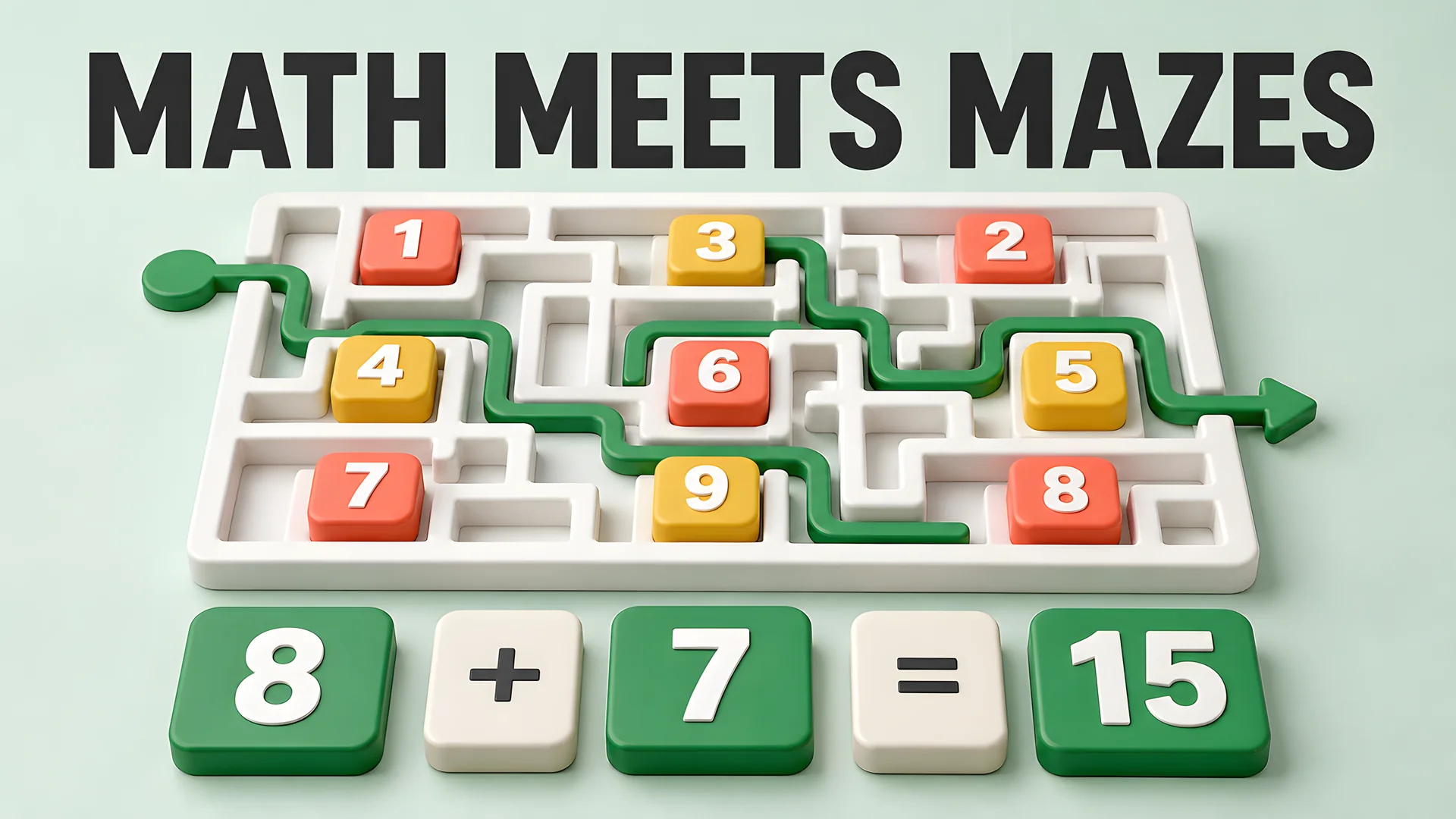
Math Mazes
Print three math mazes to practice sums, times tables, and counting by fives. Each has clear rules, a checked route, and its own answer key.
Kids & Classrooms

No-Left-Turn Mazes
Track position and heading in no-left-turn mazes. Includes a worked route, precise U-turn rules, two practice puzzles, and separate solutions.
Solving Mazes
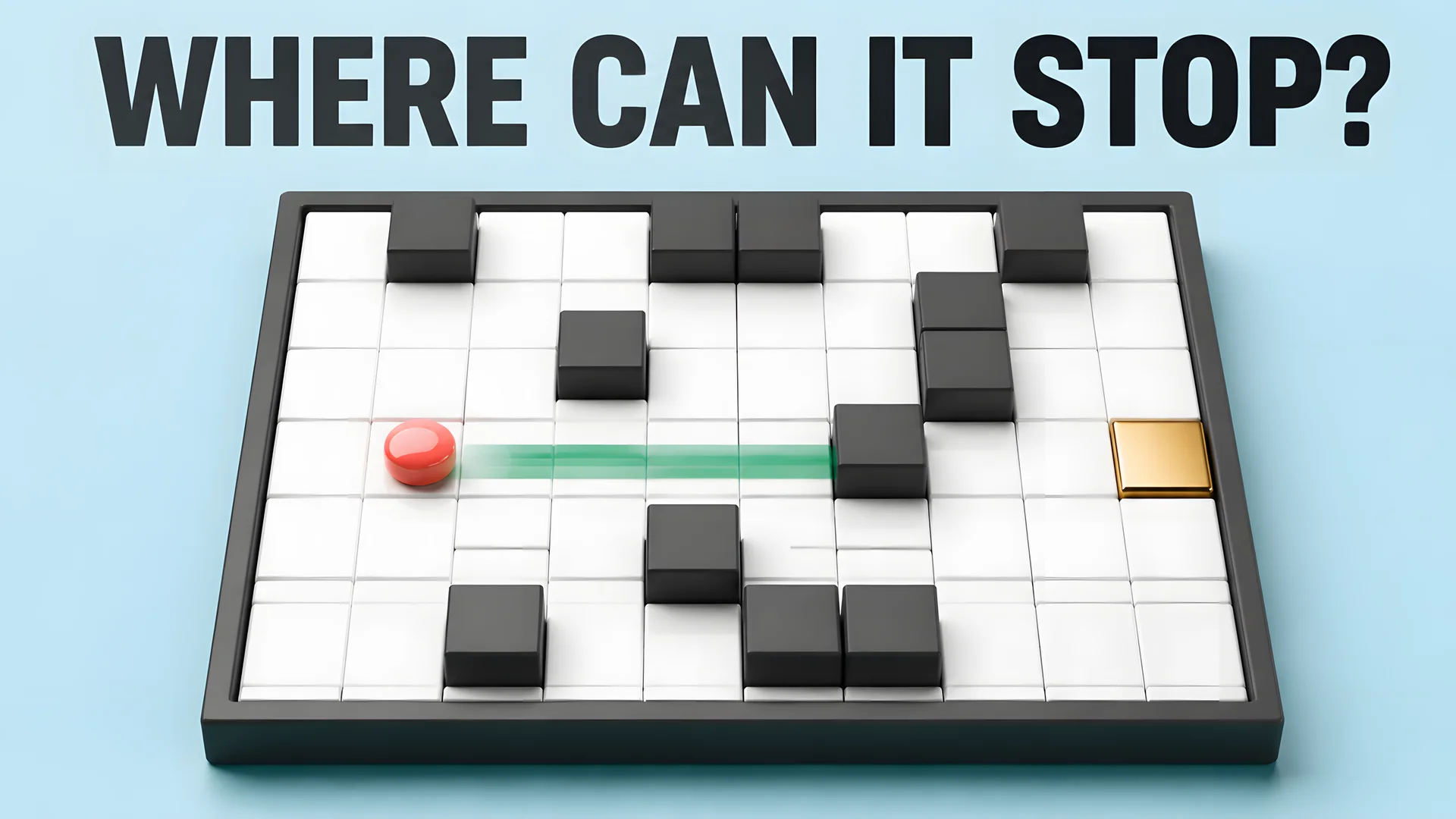
Tilt Mazes
Solve sliding-grid tilt mazes by finding legal stops and planning backward from the goal. Includes an original 7-by-7 puzzle and answer card.
Solving Mazes
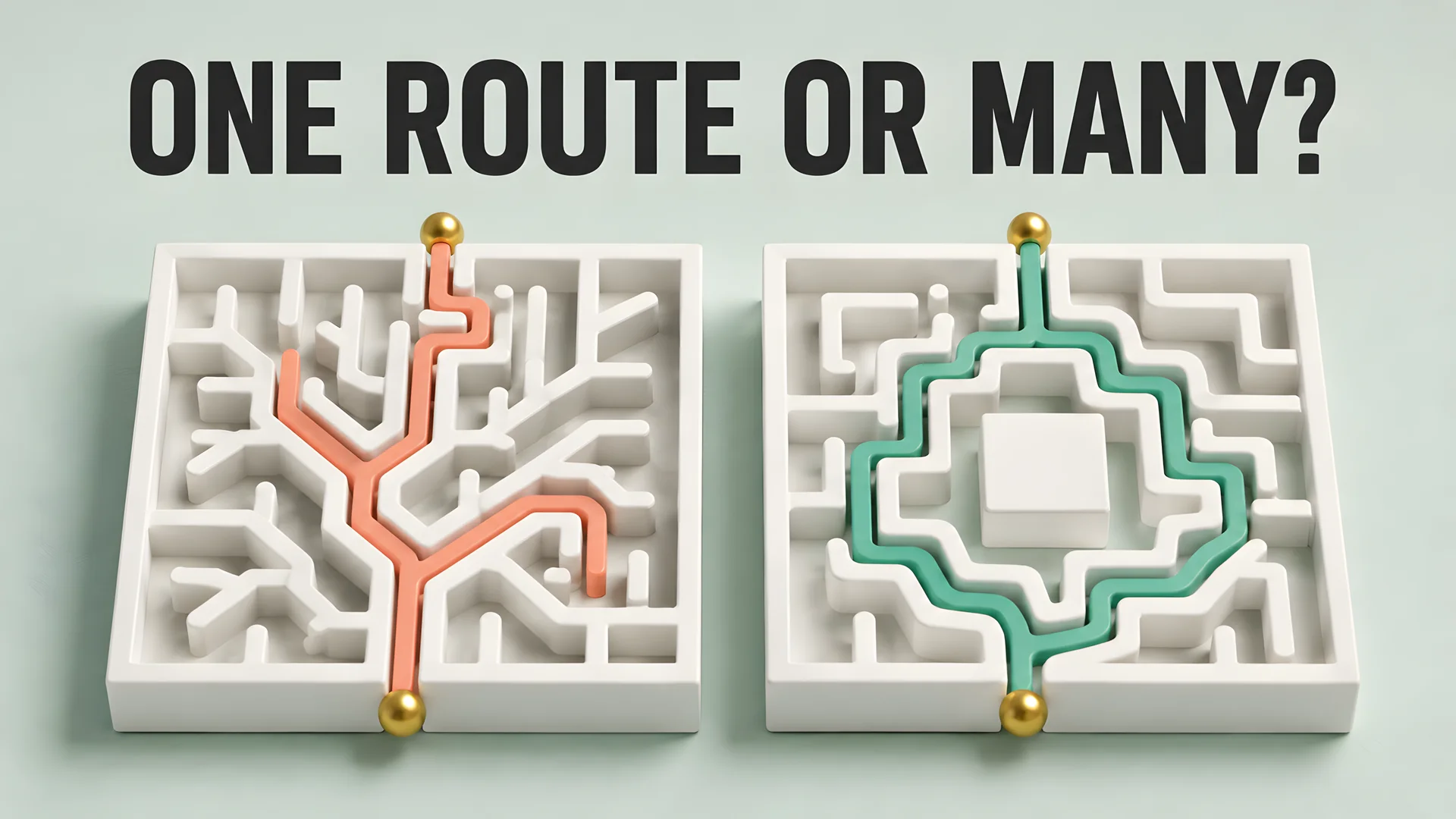
Perfect vs. Braid Mazes
See how removing two walls changes one maze. Follow the checked routes, count loops and dead ends, and learn when wall-following can fail.
Maze Basics
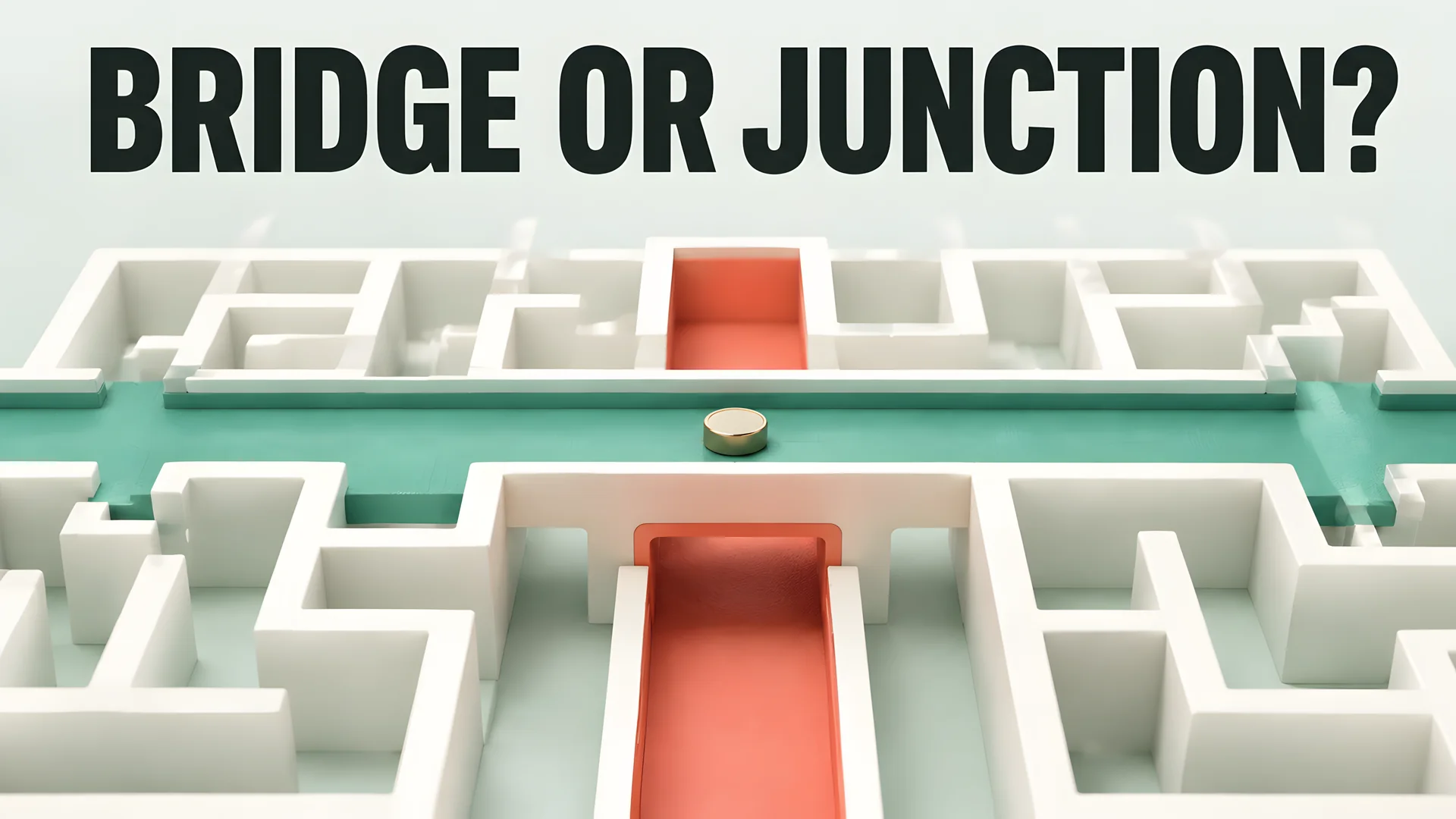
Weave Mazes
Read weave-maze crossings without taking illegal turns. Includes a clear bridge-and-tunnel legend, a worked route, and three solved exercises.
Maze Basics
9 maze brain teaser puzzles for people bored of ordinary mazes
Nine maze-based brain teaser puzzles with answers, from area mazes and word mazes to hex, tilt, and weave mazes, with honest difficulty notes and where to print them.
Solving Mazes

Theseus and the Minotaur: the myth behind the first maze
Theseus and the Minotaur explained: who built the Labyrinth of Crete, how Ariadne's thread led Theseus out, what Knossos was, and why a thread became a clue.
History & Culture

Walking a Labyrinth: Benefits, Meditation and How It Works
Learn the benefits of walking a labyrinth, how labyrinth meditation works, and how to try a prayer labyrinth or finger labyrinth step by step.
History & Culture
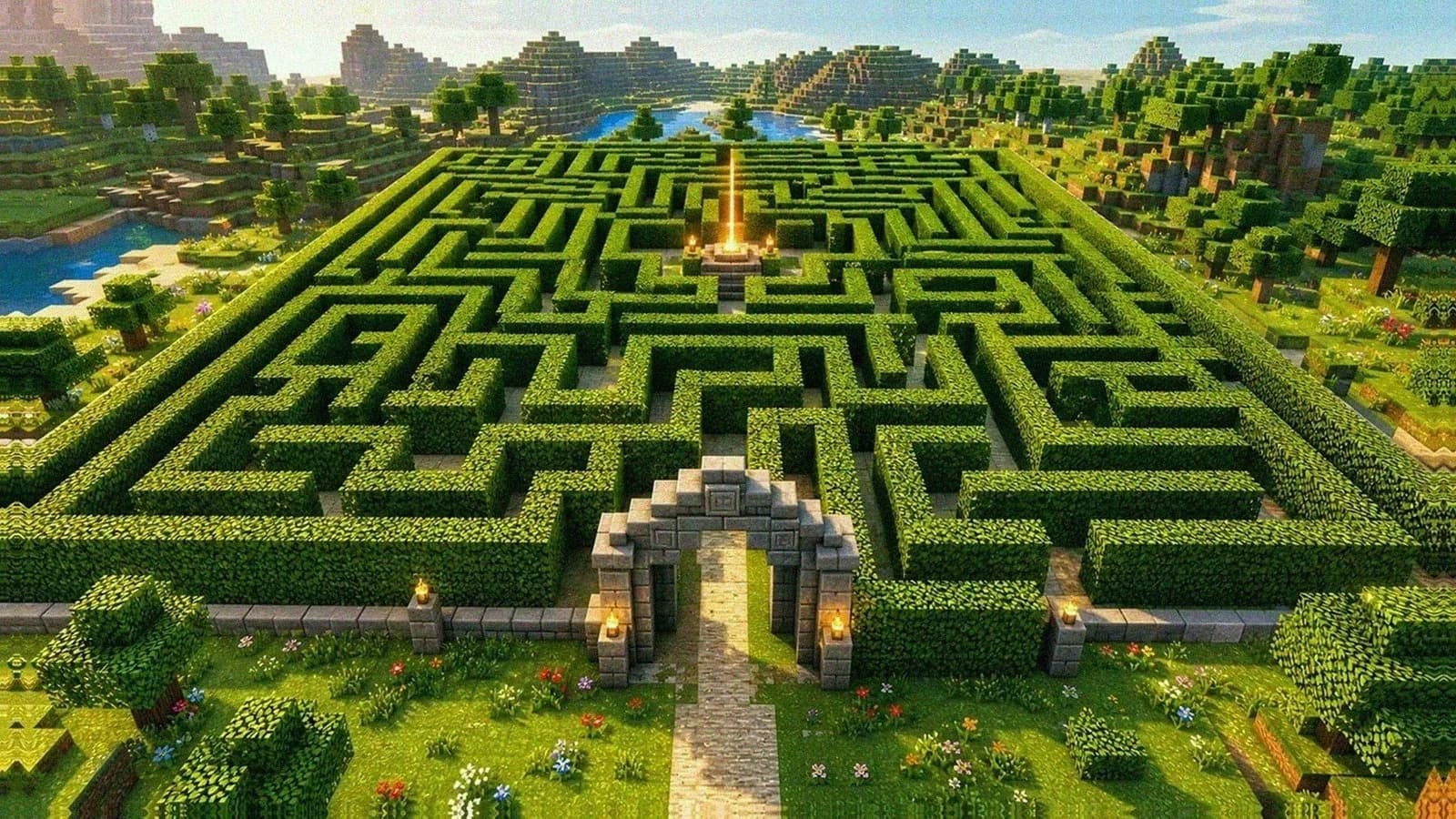
Minecraft maze generator: turn a maze into a Minecraft build
Minecraft maze generator guide: design a real maze layout, scale it to blocks, then build it by hand, with /fill commands, or with plugins and datapacks.
Making Mazes
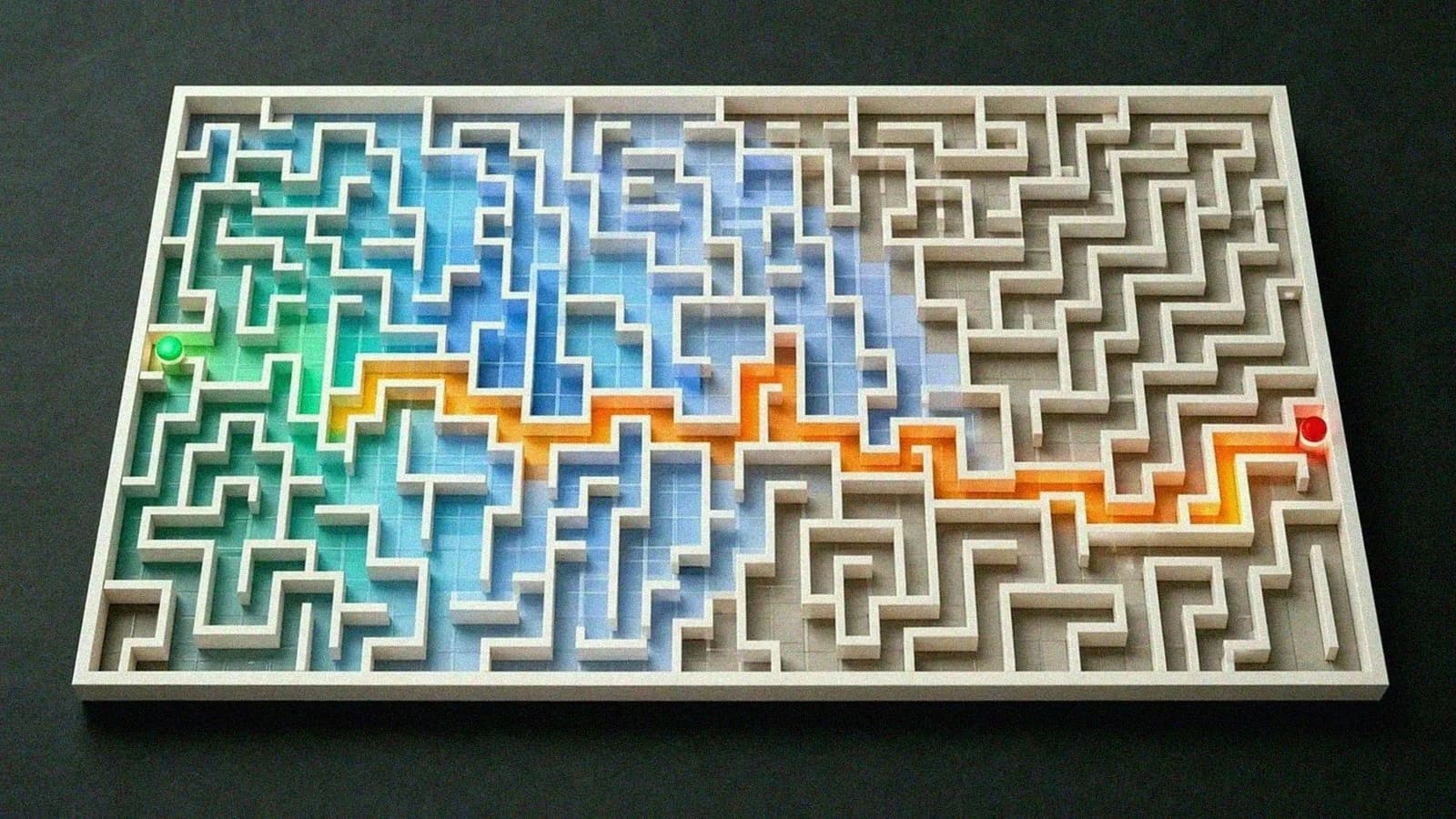
Maze solving algorithms: wall follower, Trémaux, and A*
Maze solving algorithms explained: wall follower, Pledge, Trémaux, dead-end filling, BFS, DFS, Dijkstra, and A*, with working code and advice on which to use.
Solving Mazes
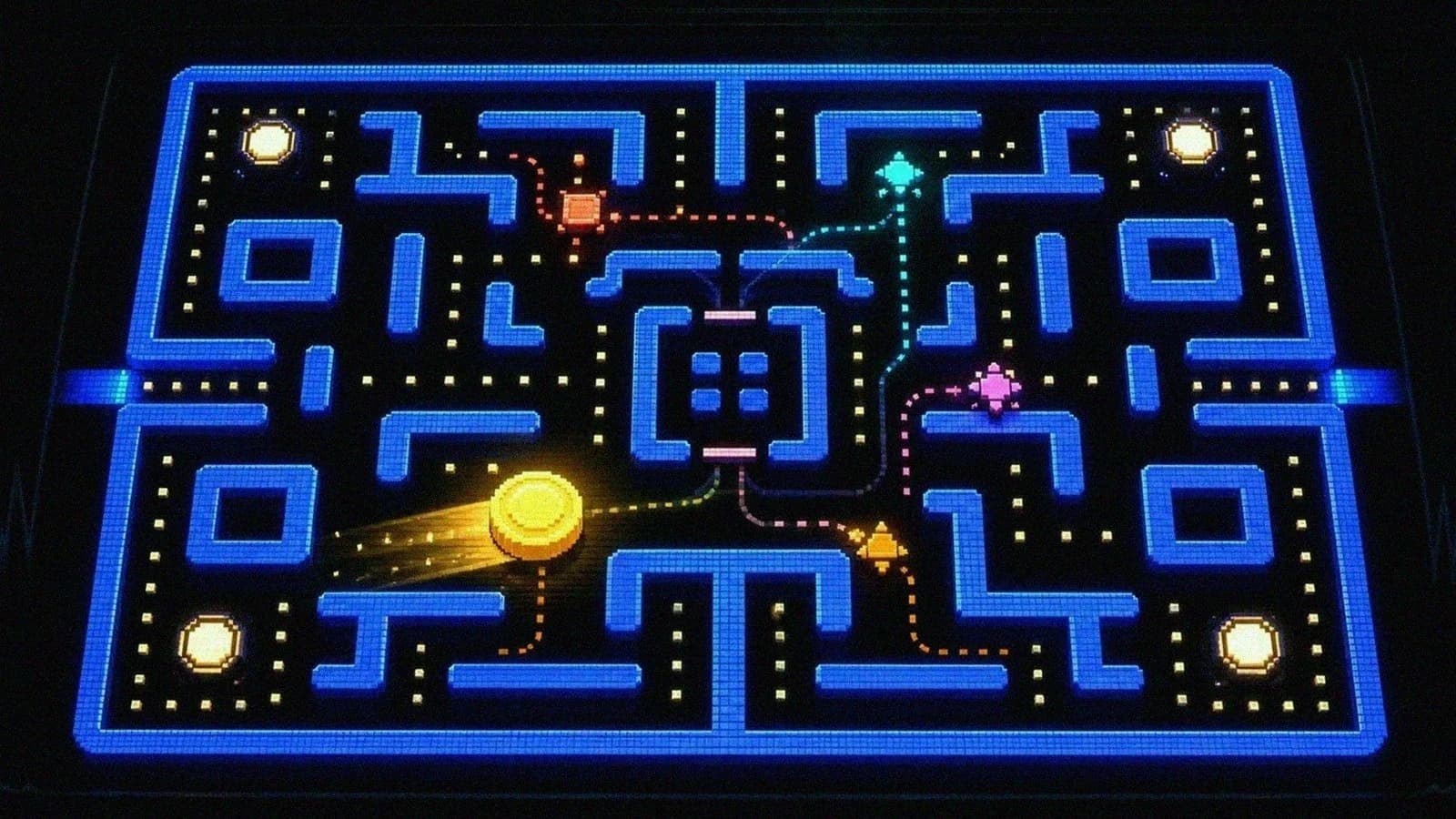
Pac-Man mazes: how gaming's most famous maze really works
Pac-Man mazes explained: the 28×31 tile layout, the 240 dots, why there are no dead ends, how the ghost AI uses the maze, and how to design your own.
History & Culture
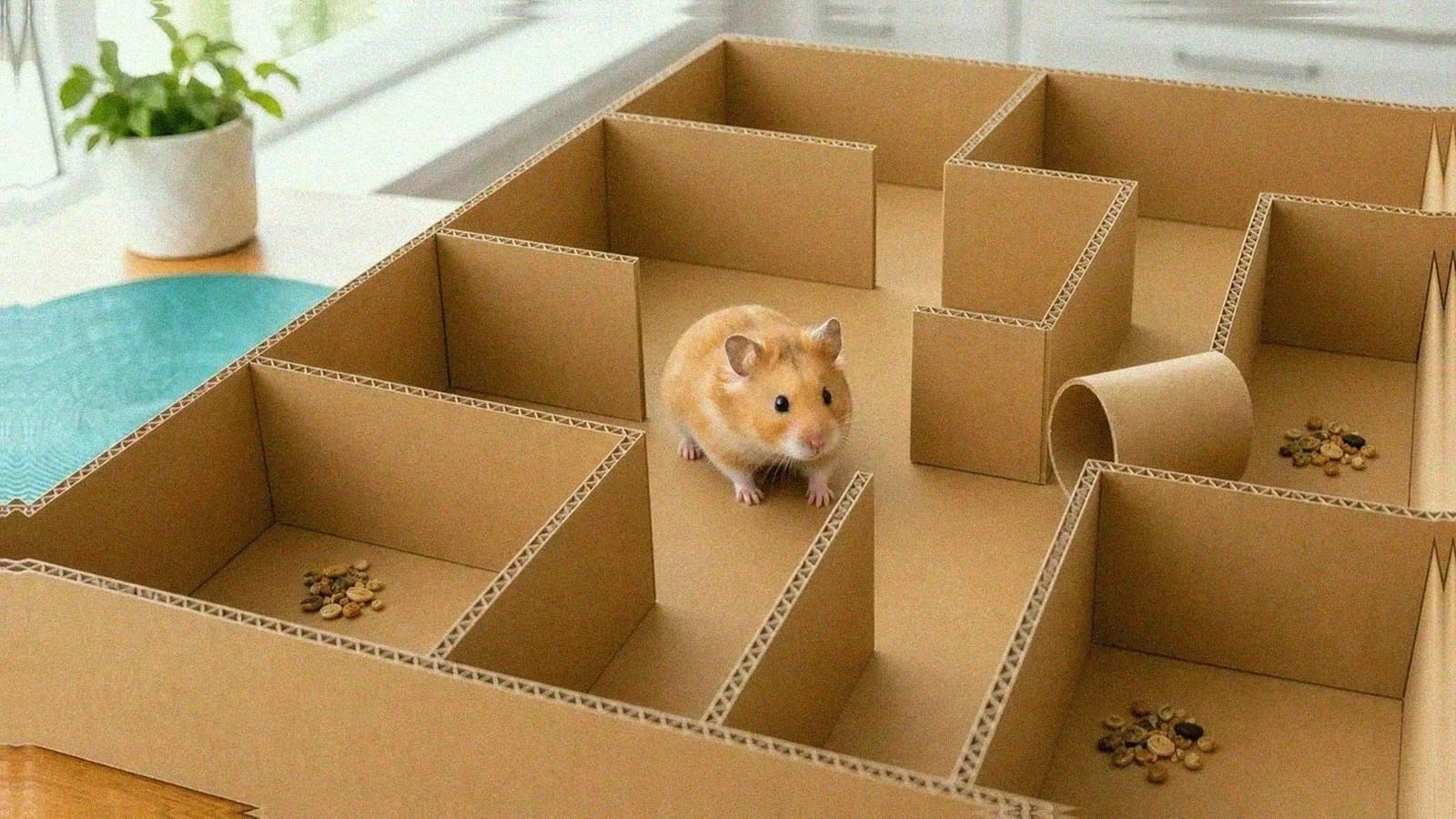
Hamster mazes: DIY ideas your hamster will actually run
Hamster maze DIY guide: safe materials, corridor sizes for Syrians and dwarfs, a step-by-step cardboard build, and 7 ideas your hamster will actually run.
Making Mazes

Mirror mazes: how they work and why your brain gets lost
Mirror mazes explained: the 60-degree triangle geometry, the optics that defeat your depth perception, how to find the exit, and famous mirror mazes to visit.
History & Culture
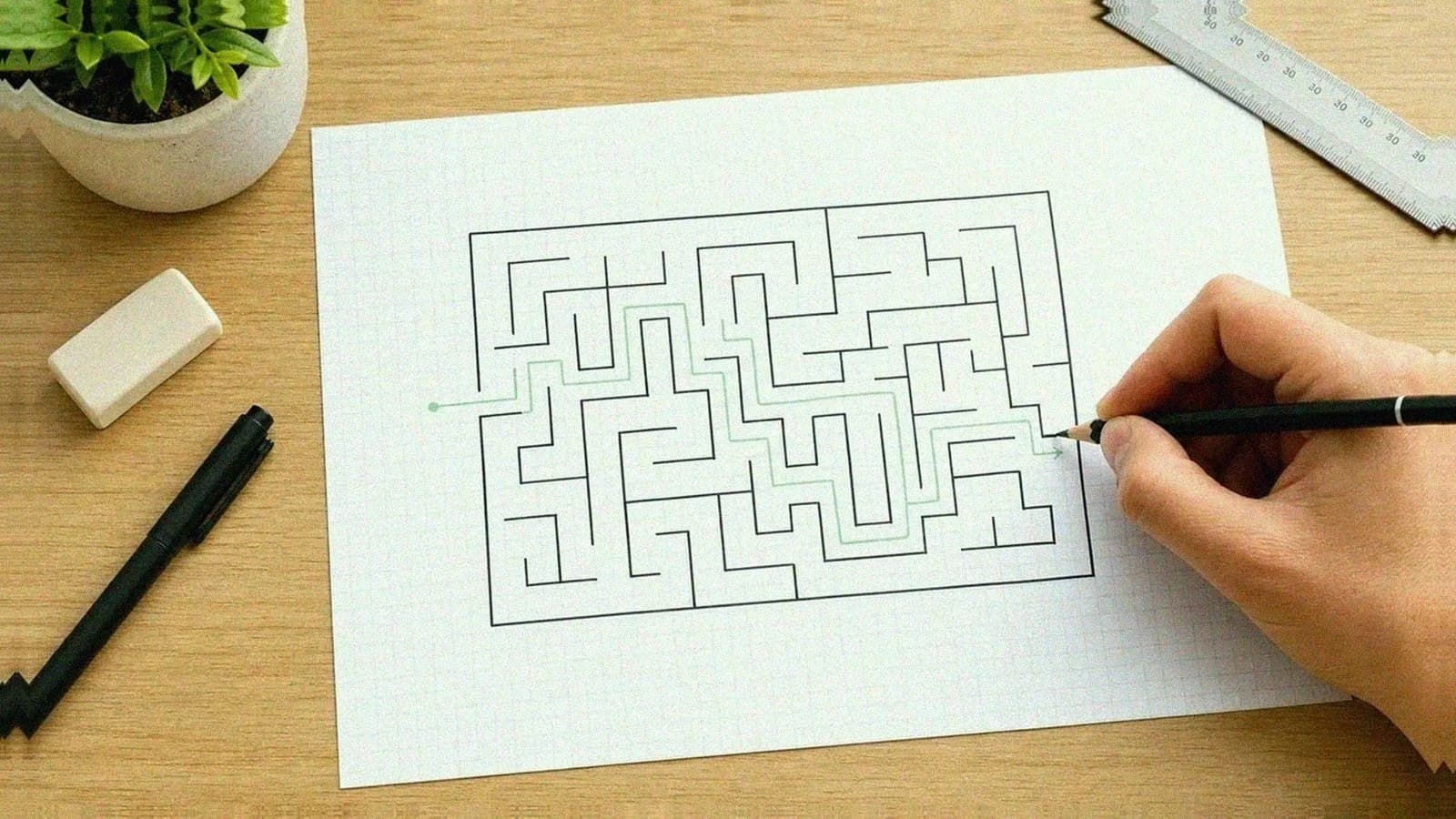
How to draw a maze? A step-by-step guide (easy to hard)
Learn how to draw a maze by hand. The grid method, the draw-the-solution-first trick, easy vs hard controls, shapes, and a free generator for instant mazes.
Making Mazes
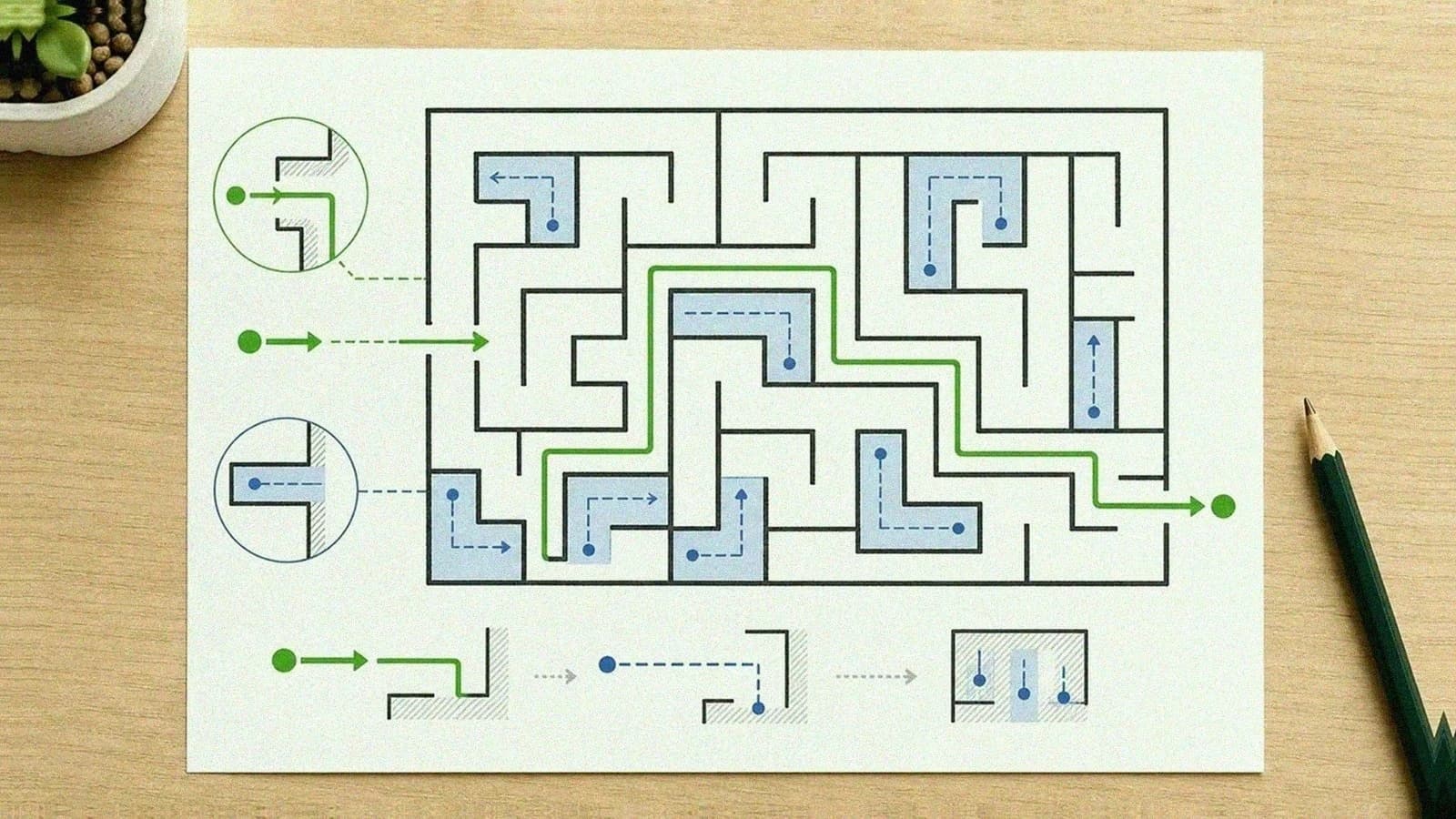
How to solve a maze? Practical methods for paper, walking, and code
Learn how to solve a maze with the hand-on-wall rule, dead-end filling, Trémaux's method, Pledge, BFS, A*, and flood fill.
Solving Mazes
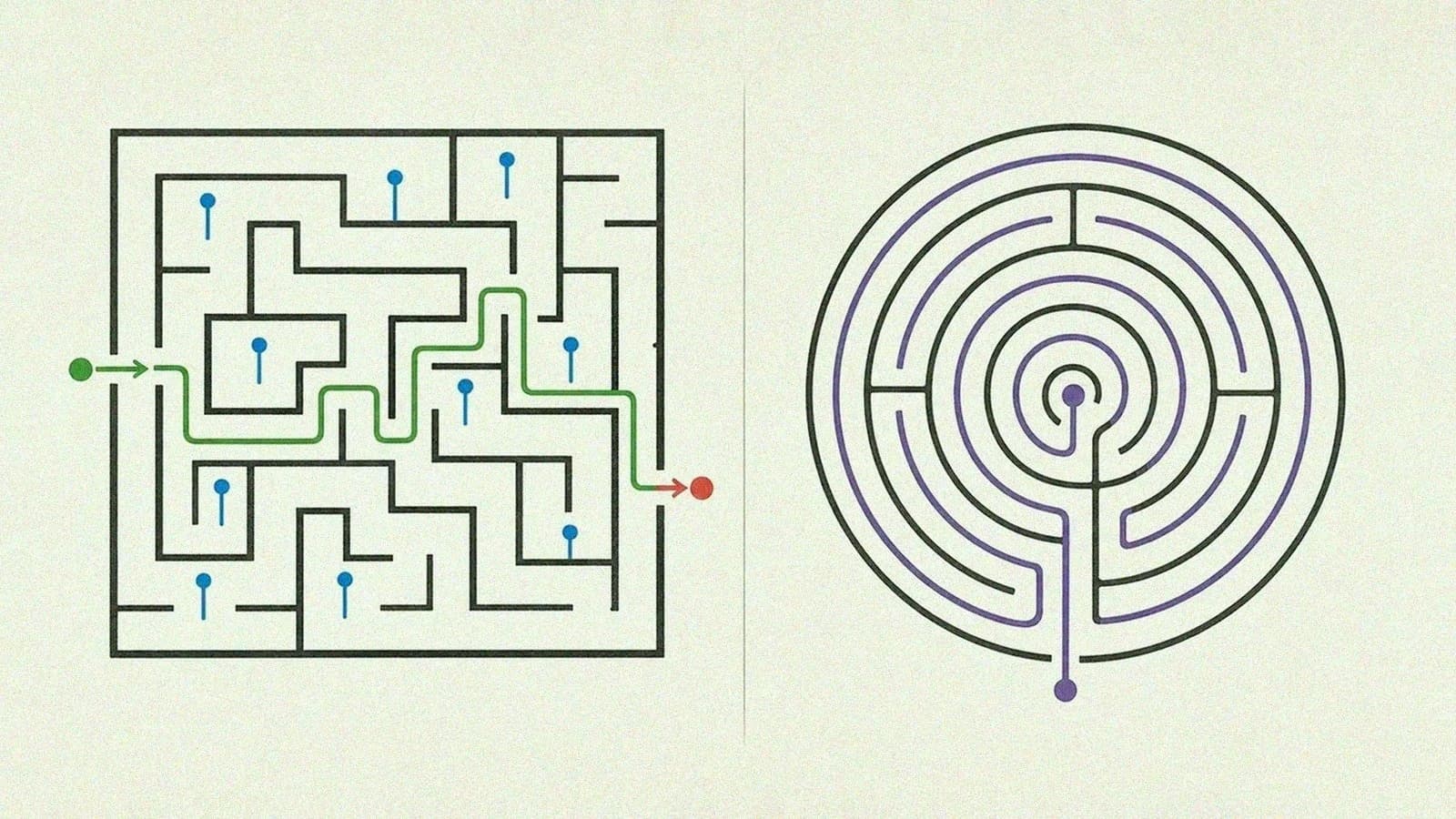
Maze vs. labyrinth: what's the difference? (with pictures)
Maze vs labyrinth explained: a labyrinth has one winding path, a maze branches with dead ends. See the history, types, examples, and a comparison table.
History & Culture

What is a maze? The main types of mazes explained (with examples)
What is a maze, and what are the types of mazes? A clear guide to perfect, braid, unicursal, and multicursal mazes by shape, medium, and how they are made.
Maze Basics
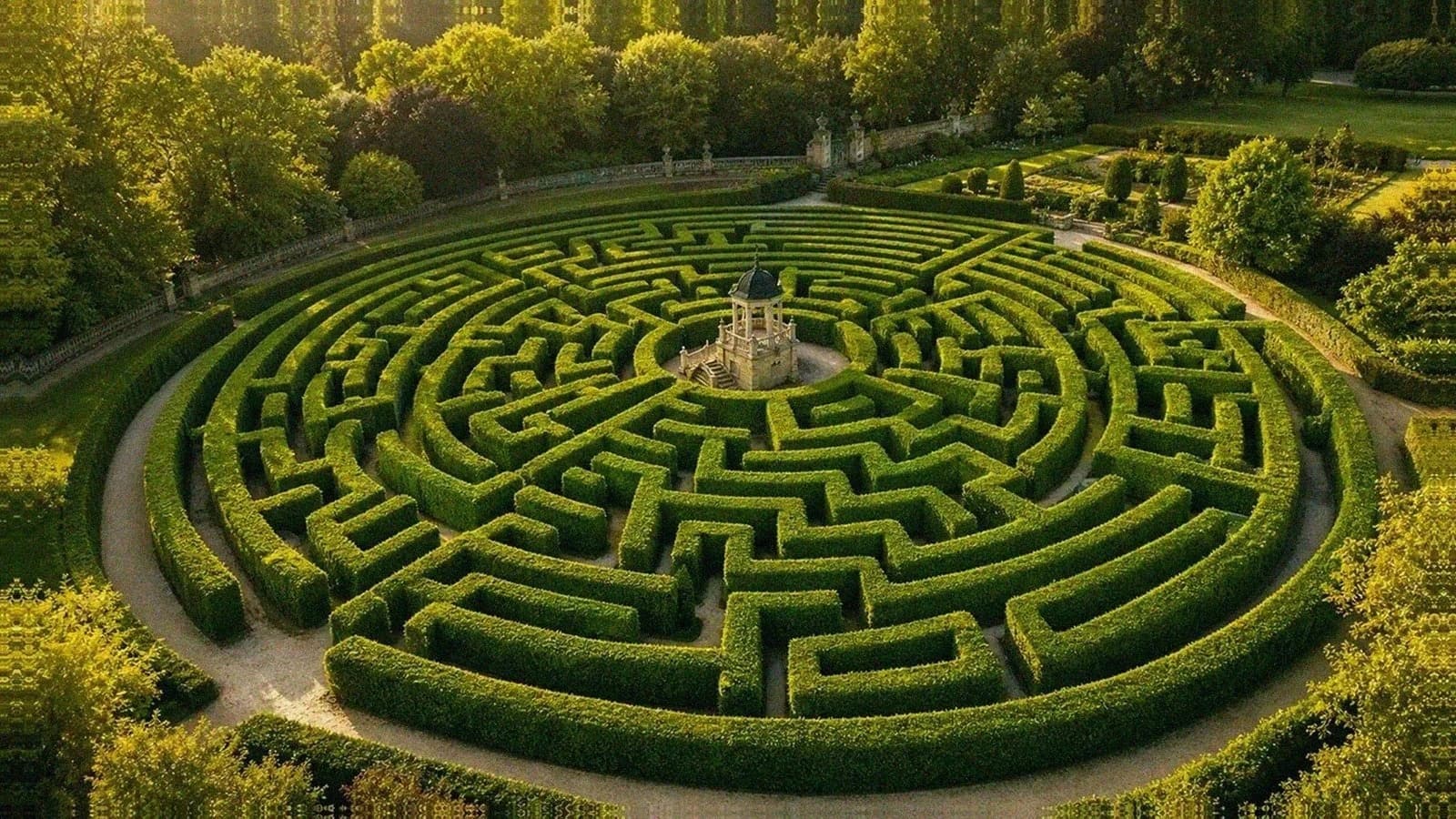
Famous Hedge Mazes to Visit Around the World
A sourced guide to famous hedge mazes, giant corn mazes, Chartres Cathedral's labyrinth, and the current Guinness maze records by size.
History & Culture
Free preschool and kindergarten maze worksheets (printable)
Free printable maze worksheets for preschool and kindergarten, sorted by age (3, 4, 5), theme, and skill, with an OT-backed guide to the benefits, teaching steps, and printing.
Kids & Classrooms
Printable mazes for kids by grade: kindergarten to 5th (free PDFs)
Free printable mazes for kids, matched to each grade from kindergarten to 5th. The right maze size and difficulty for K, 1st, 2nd, 3rd, 4th, and 5th graders, with real examples.
Kids & Classrooms
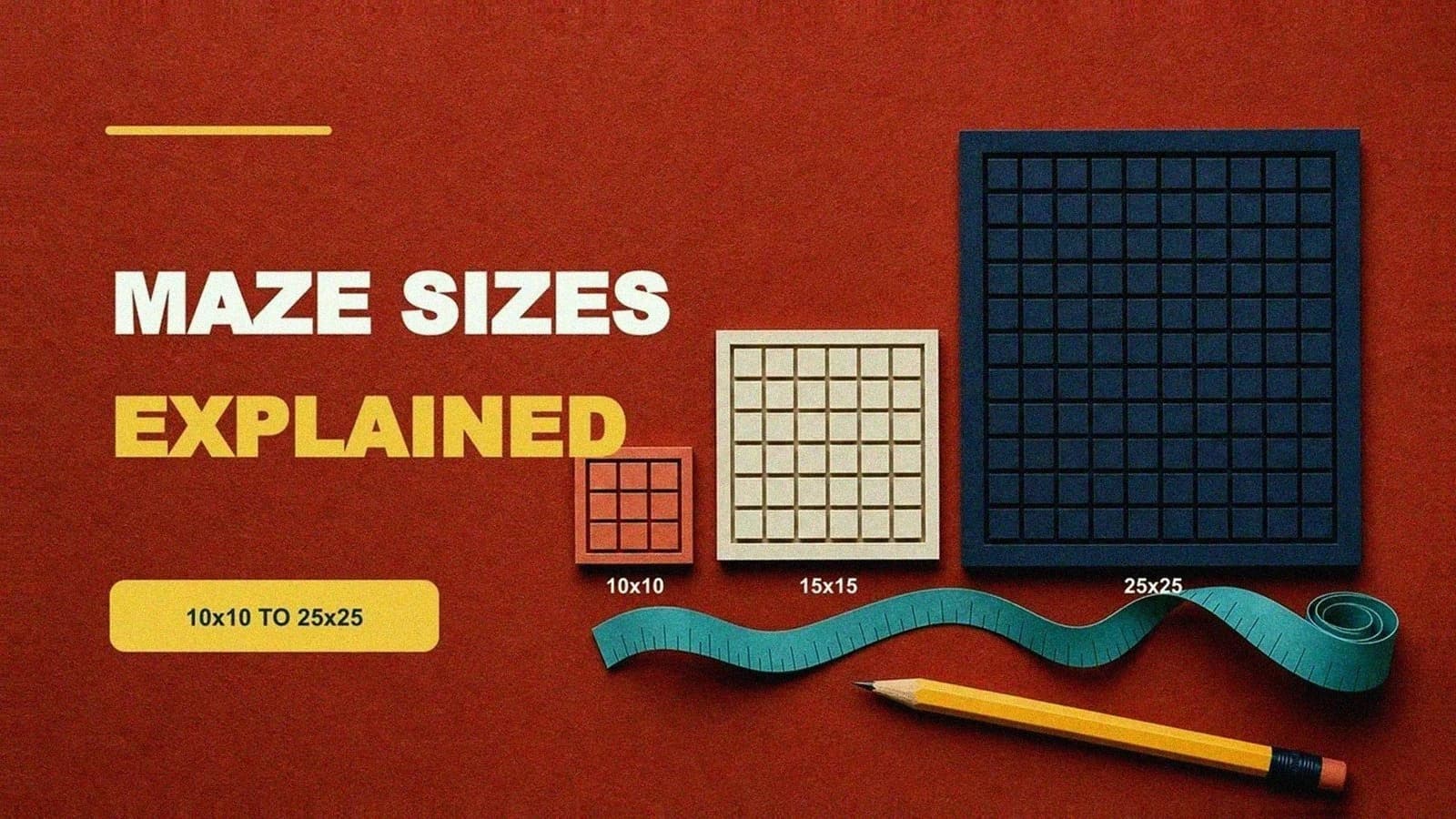
Maze sizes explained: what 10×10, 15×15, and 25×25 feel like
A practical guide to maze size choices for kids, classrooms, and adults, with a quick table and printing notes.
Maze Basics
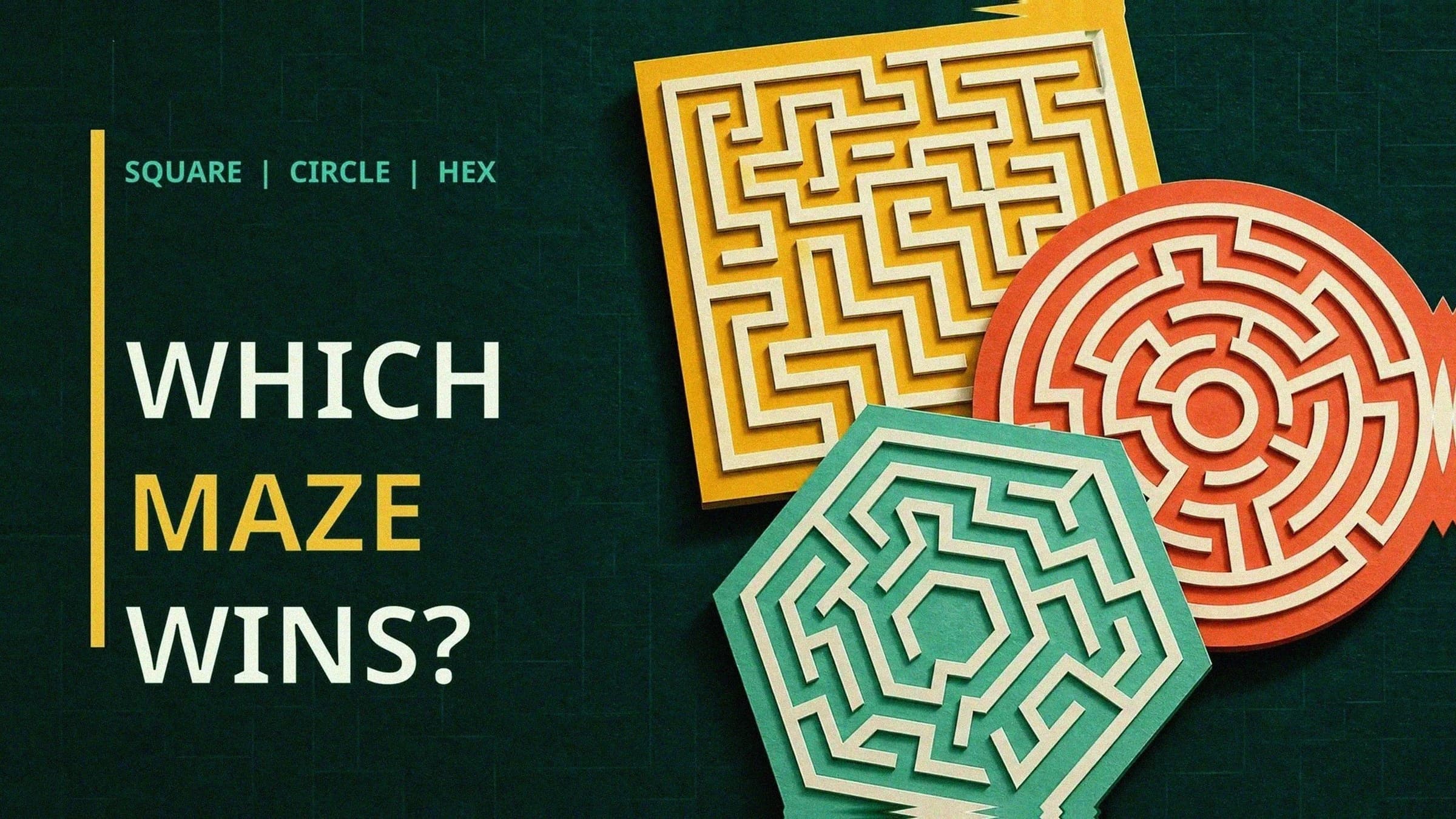
Maze shapes compared: square maze vs circular vs hex
Square, circular, and hexagonal maze shapes compared. We generated the same maze in all three shapes and measured what changed, with printable examples of each.
Maze Basics
Productive struggle: help a stuck kid without rescuing them
What productive struggle means, how to tell it from plain frustration, and a simple coaching script for helping a stuck kid (on a maze or anything else) without rescuing them.
Kids & Classrooms
Preschool themes: 50+ weekly theme ideas (with free mazes)
A year of preschool themes organized by season, each with a ready-to-use maze prompt. Plus the 5-day theme week routine and how to keep your printables copyright-safe.
Kids & Classrooms

Maze generation algorithms: how a maze is actually made
Learn how our recursive backtracker builds a maze, how other algorithms differ, and how seeds and braiding change the paths you solve.
Making Mazes