I solved the same maze twice last Tuesday. Didn't notice until I reached the center and found my own pencil line already there, four days old, smug as anything. That was the moment I admitted I'd worn out ordinary brain teaser puzzles of the start-here-end-there kind, and went looking for variations that would make my brain work for its dinner again.
If you're in the same spot, here's the shortlist up front. All nine variations below use maze mechanics you already know, and each one breaks a different solving habit. The table gives you the twist and the time cost; honest difficulty notes and a couple of personal humiliations are underneath.
| Variation | The twist | Time for one | Where to get it |
|---|---|---|---|
| Area maze | Find missing rectangle areas | 5-15 min | Puzzle books, newspaper puzzle columns |
| Word maze | The path spells the answer | About 5 min | Puzzle books, classroom worksheets |
| Number maze | Path must hit a sum or sequence | 5-10 min | Puzzle books, or DIY over any printed maze |
| Logic maze | Extra rules restrict legal moves | 15+ min | Robert Abbott's site, puzzle apps |
| Arrow maze | One-way cells, like city streets | 5-10 min | Puzzle books |
| Tilt maze | You slide until a wall stops you | 5-15 min | Apps, wooden versions |
| Circular maze | Radial paths wreck your landmarks | 5-20 min | Our circular mazes |
| Hex maze | Three-way junctions everywhere | 10-30 min | Our hex mazes |
| Weave maze | Paths cross over and under | 10-20 min | Specialty puzzle books |
Everything on this list is kitchen-table safe. No screens required, nothing you'd think twice about leaving on the coffee table when the grandparents visit.
the nine variations
1. area mazes (menseki meiro)
Japanese puzzle designer Naoki Inaba invented these, and they jumped languages after Alex Bellos featured them in his Guardian puzzle column back in 2015. The book version, The Original Area Mazes, is the one most people start with.
The setup looks like geometry homework. A figure made of overlapping rectangles, some lengths given, one area marked with a question mark. The pleasure is that you need nothing beyond whole-number reasoning, and the trap is that the drawing is deliberately out of scale, so your eyes keep offering you answers the math hasn't earned.
I burned twenty minutes on one in a dentist's waiting room because I trusted a right angle that wasn't. In my experience the first five or six feel impossible, and then the trick clicks and you start seeing the shared edges everywhere.
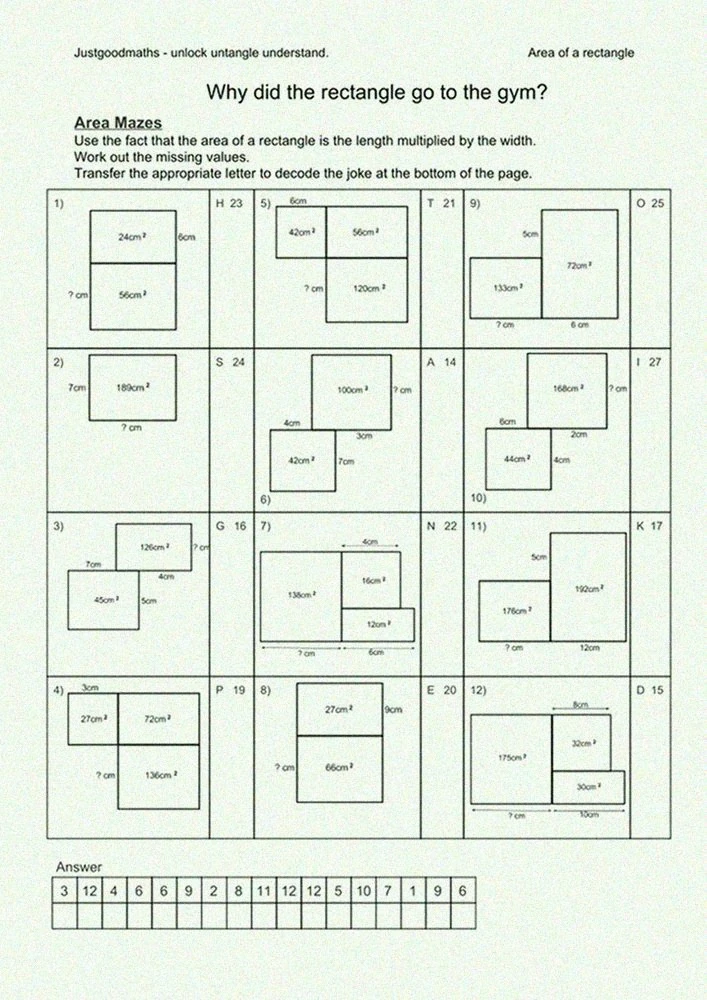
Real worksheet. Puzzles by Justgoodmaths, from the
Menseki Meiro resource on Tes
. The resource is marked
Creative Commons ShareAlike
by its author; these local copies are re-encoded for web delivery.
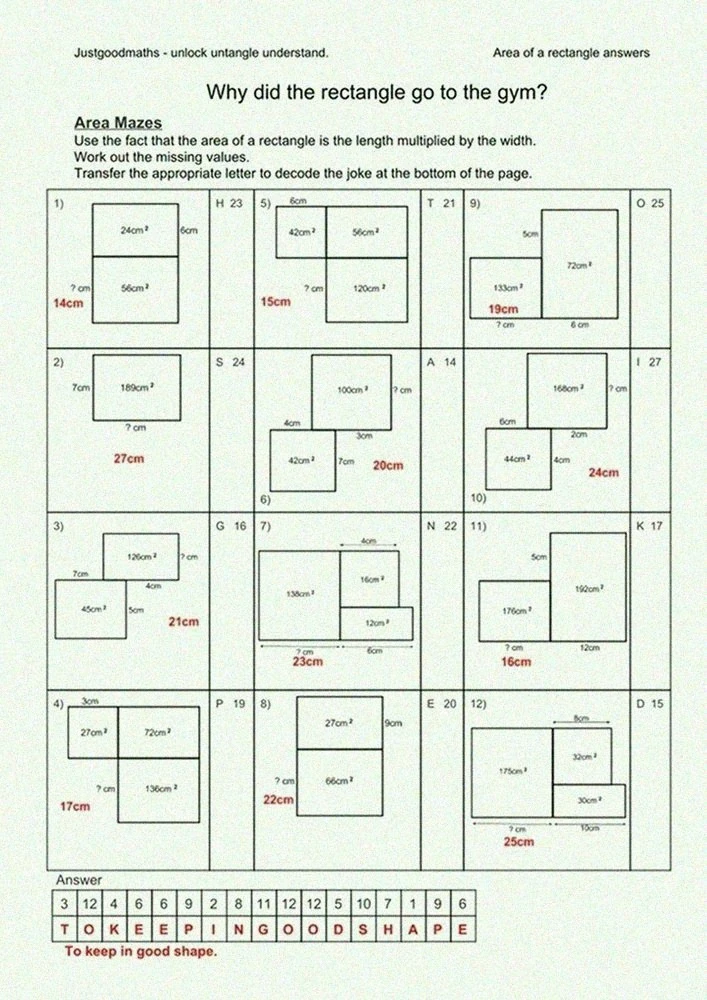
Answer key. Same
Justgoodmaths source resource
, with the missing values and final joke filled in.
2. word mazes
Walk the maze, collect letters along the correct path, and they spell a phrase or the answer to a riddle printed at the top. Wrong turns collect gibberish, which is its own feedback system.
Teachers use these constantly for spelling practice, which is why you'll find them all over worksheet sites. Adults underestimate them. A well-built word maze with near-miss decoy paths is a real puzzle, and my mother-in-law, a retired librarian who does cryptic crosswords for fun, got properly stuck on one I left on the fridge. She finished it. She also moved it to eye level so everyone would know.
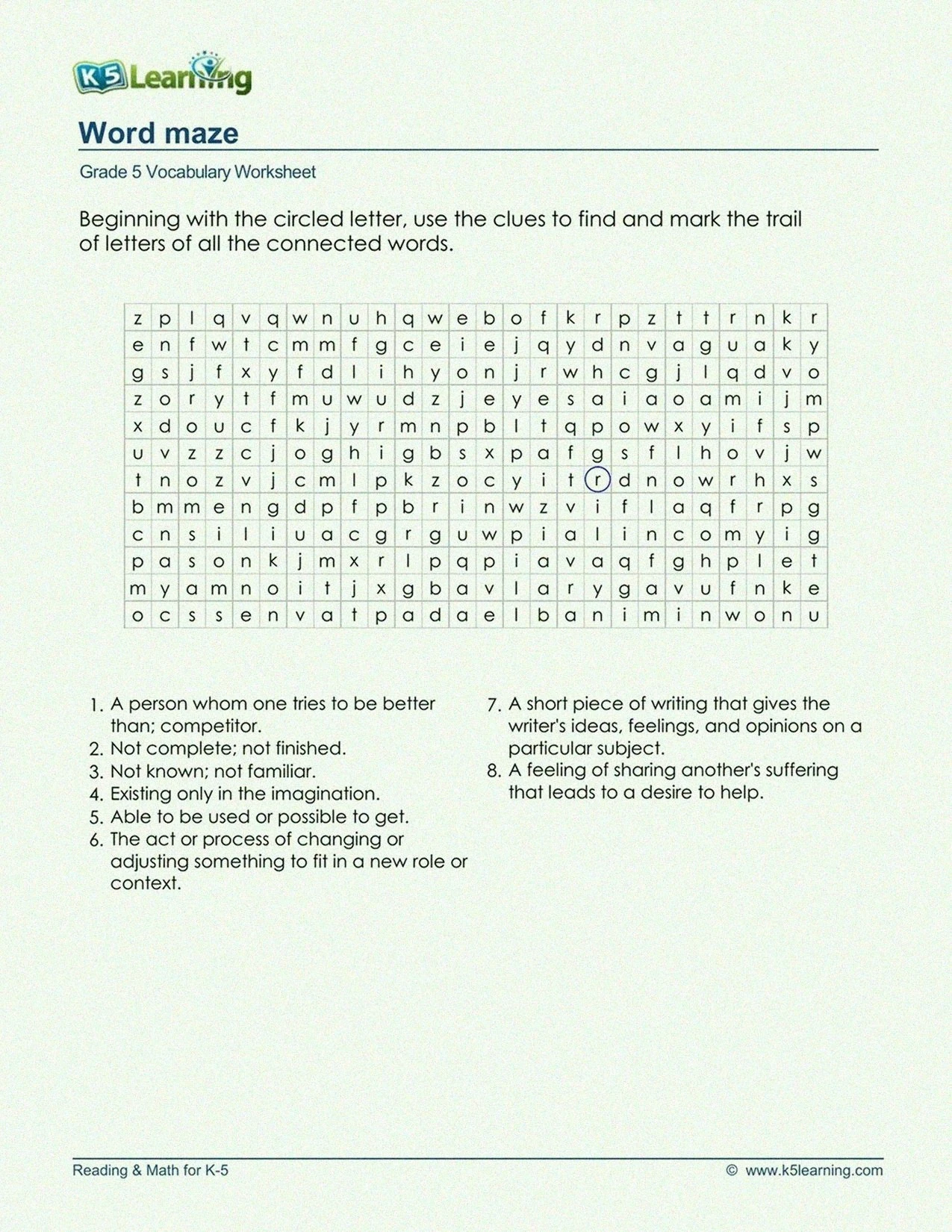
Real worksheet. Source:
K5 Learning's Grade 5 Word Maze worksheet
. The original worksheet branding and source line remain visible.
3. number and math mazes
Two main flavors here. In one, every cell you pass adds to a running total and the exit only opens if you arrive with the target sum. In the other, you move by following a sequence, counting by sevens or stepping through primes.
Here's a tip I'm burying mid-list because it doesn't deserve its own section. Take any maze off a generator, ours included, and handwrite numbers into the cells along and around the solution path. Instant math maze, tuned to whatever a kid (or you) needs to practice. It takes four minutes with a pen and a printed maze worksheet.
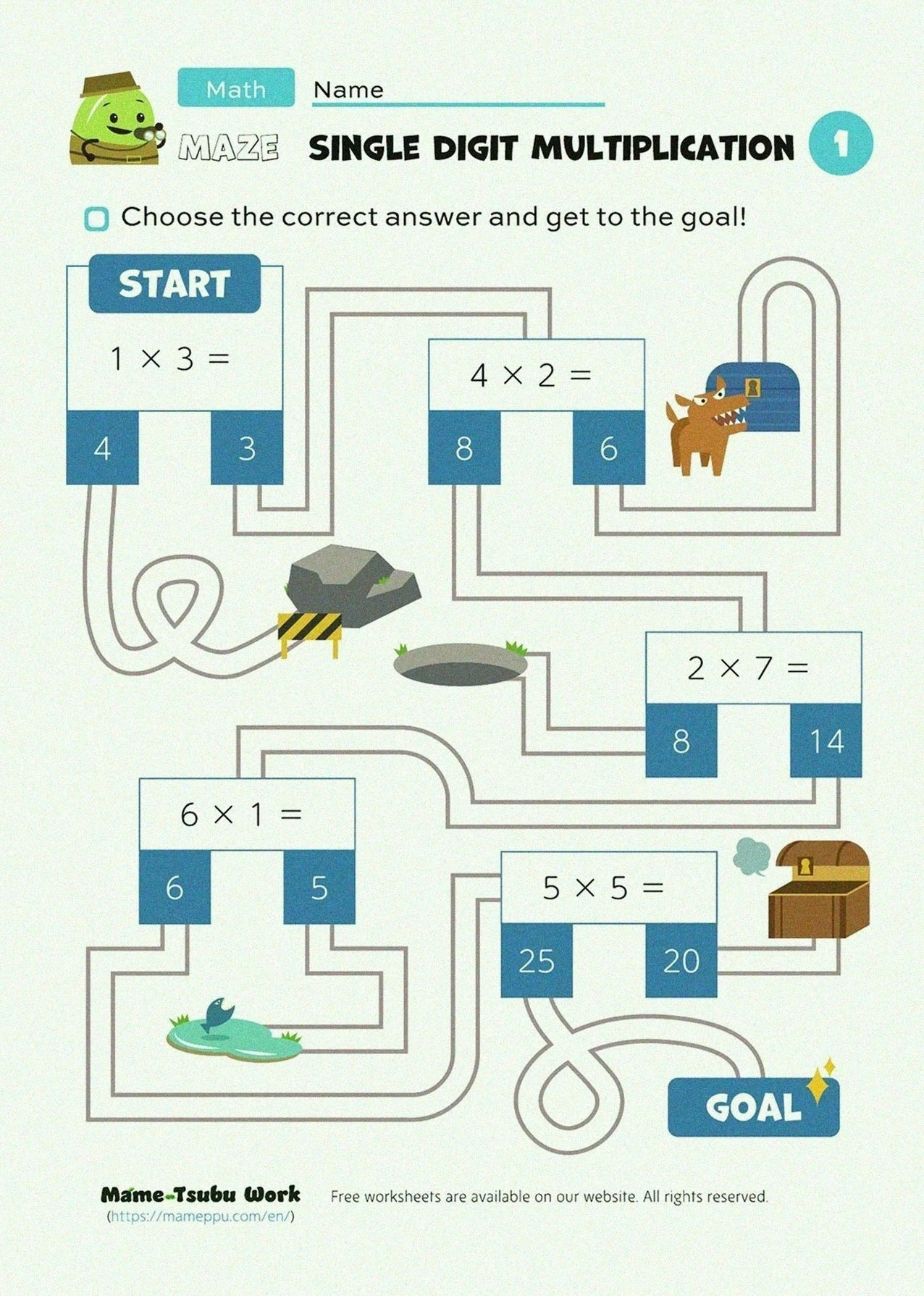
Real worksheet. Source:
Mameppu's Single Digit Multiplication Math Maze
. The sheet's original credit remains visible at the bottom.
4. logic mazes
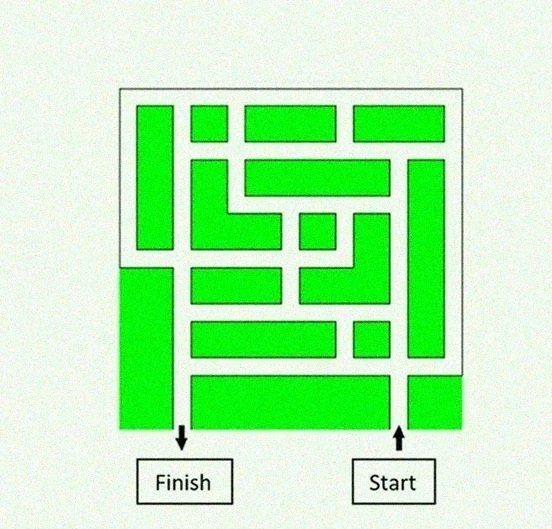
Robert Abbott helped develop logic mazes: puzzles where the route depends on a rule, not just the walls. Gathering 4 Gardner's tribute describes his work. The maze looks ordinary until you read the rule taped to it. No U-turns. Alternate red and blue cells. Never turn left twice in a row.
Suddenly the shortest visible path is illegal, and you're planning five moves ahead like it's chess. I find these genuinely hard, and I say that as someone who writes about maze difficulty for a living. For puzzles to try, Webmazes has a collection rated from 1 to 5; start at the lowest difficulty and read the rules before tracing a route.
Real rule-based puzzle. Source:
Puzzle a Day's No Turning Left Maze
, credited there to Robert Abbott.
5. arrow mazes
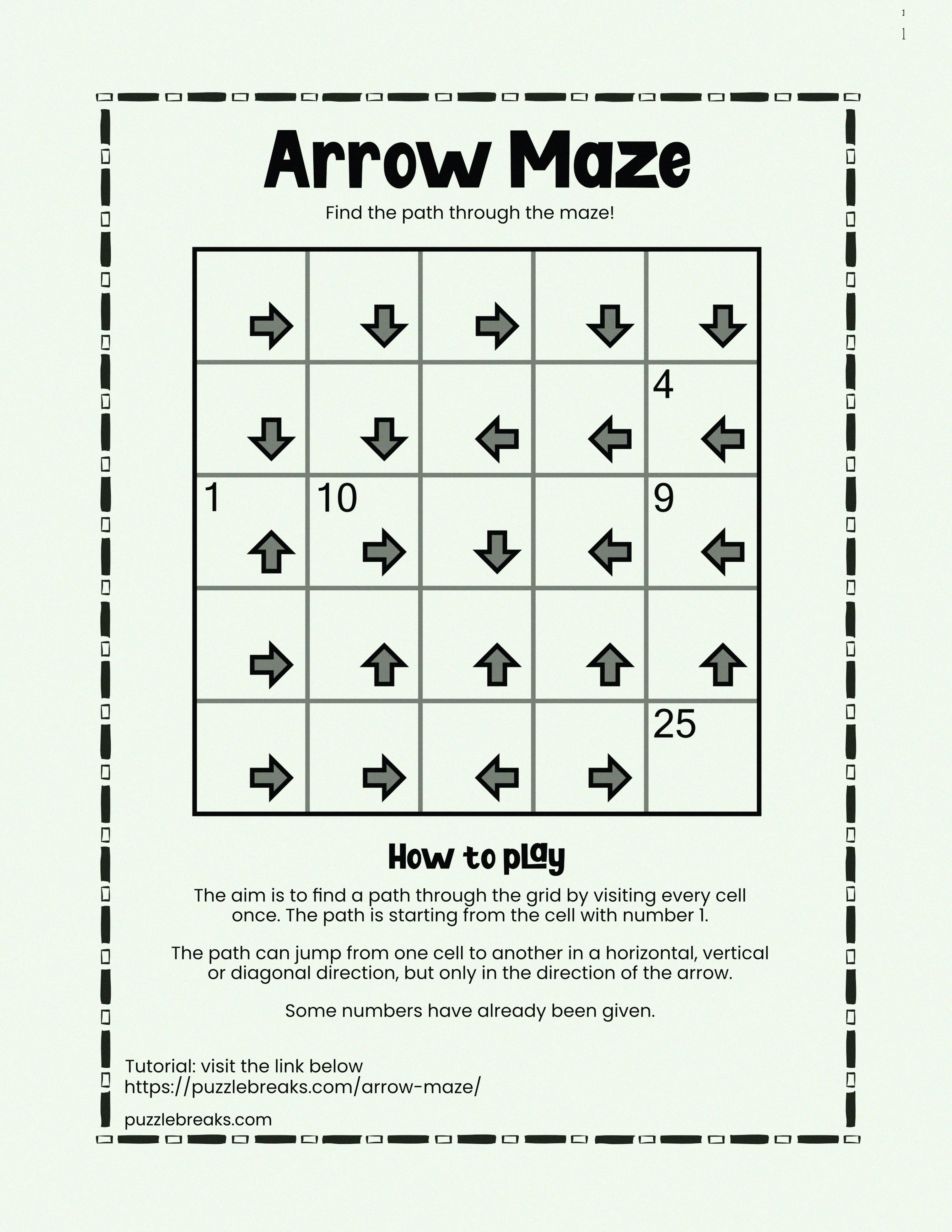
Every cell carries an arrow, and you may only leave a cell in the direction it points. Solving one feels like driving downtown in a city that loves one-way streets. You can see the exit. Getting permitted to drive there is the whole game.
These are gentler than logic mazes, which makes them a good second step after word mazes. Kids take to them fast, occassionally faster than the adults at the same table.
Real printable puzzle. Source:
Puzzle Breaks' free printable Arrow Maze collection
. This local image is page one of its downloadable 5x5 packet, with the original site URL still printed on the sheet.
6. tilt mazes
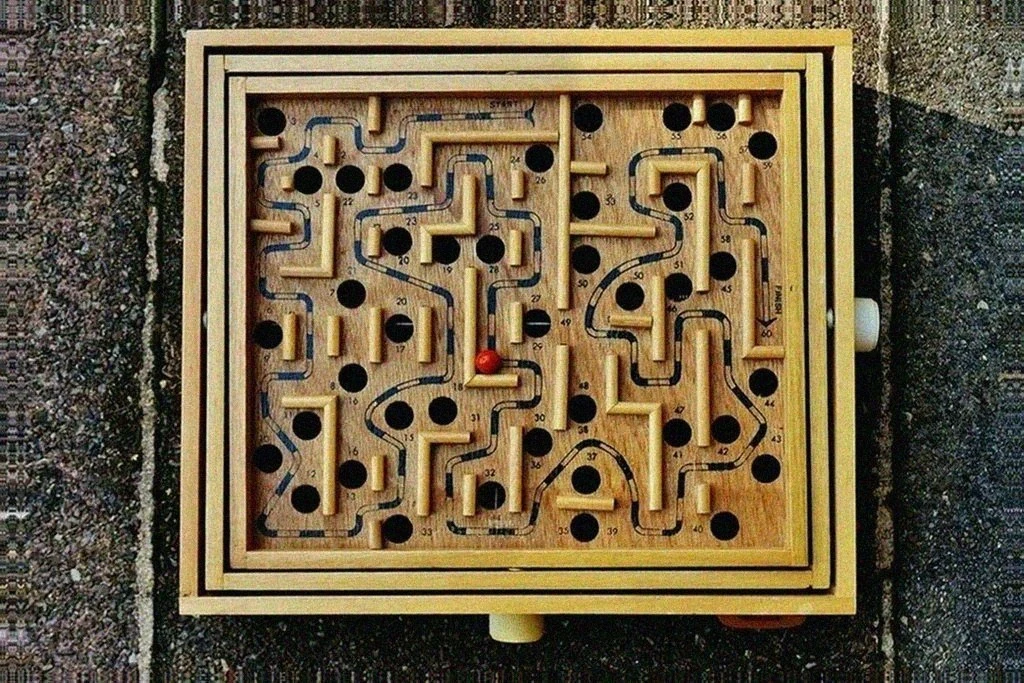
You, or a ball, slide in a straight line until a wall stops you. No inching, no stopping mid-corridor. The catch is that the shortest path in distance is almost never the shortest path in moves, so your normal maze instincts actively sabotage you for the first few puzzles.
Wooden versions with an actual ball bearing exist and make excellent desk toys. Mine wandered off my desk within a week.. (a six-year-old was seen in the area).
Real-world example. Source:
PICRYL's Labyrinth, wood, play image
, from Pixabay and published under the
CC0 1.0 Public Domain Dedication
.
7. circular mazes
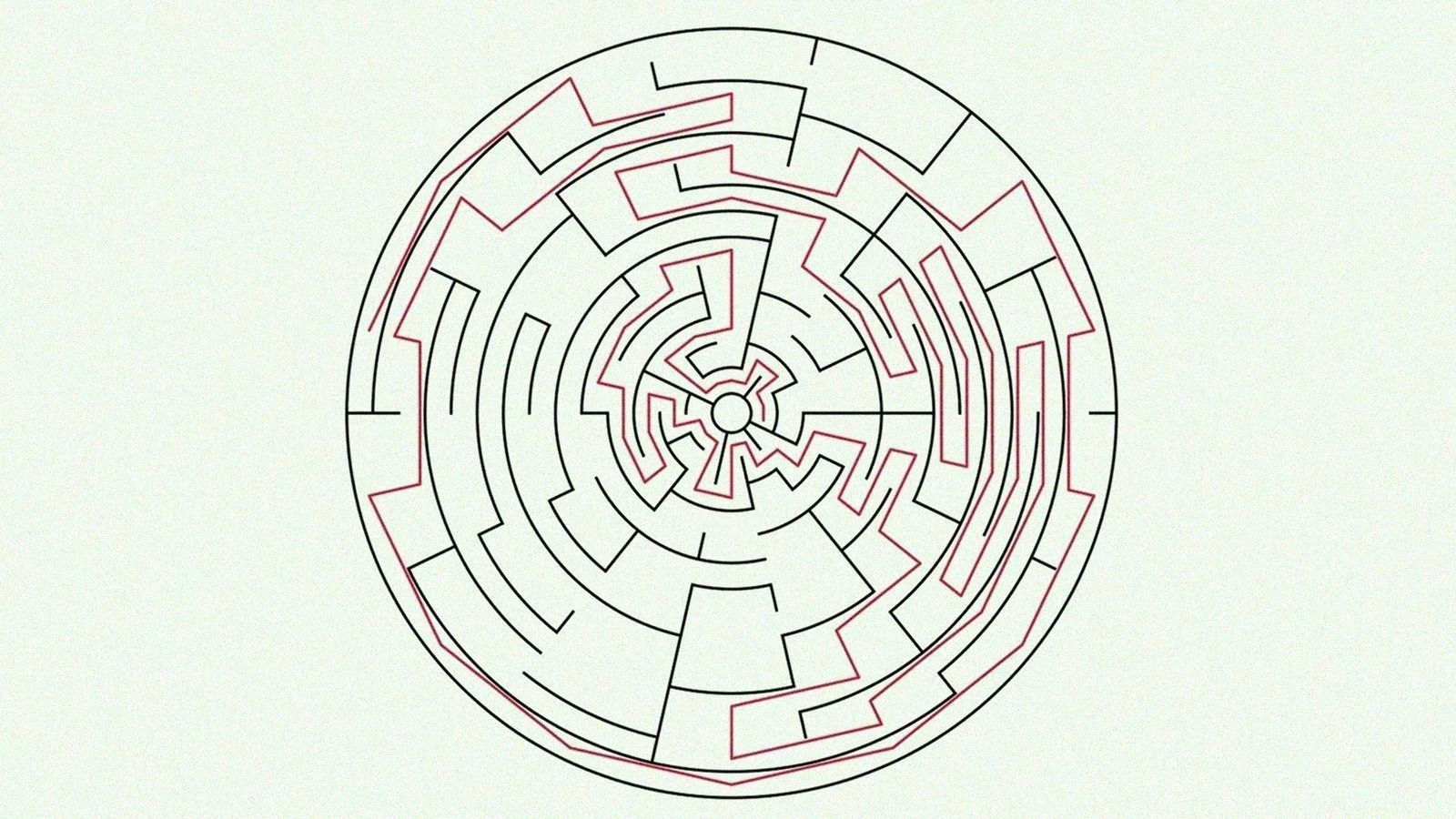
Same rules as a rectangular maze, wrapped around a center point. What changes is your sense of direction. Landmarks stop working because every ring looks like every other ring, and left and right stop meaning what they meant on grid.
One counterintuitive trick, learned after much flailing. Solve from the center outward. The paths thin out near the middle, so the reverse route has fewer wrong turns to offer. We keep a stack of printable circular mazes around, and the circular maze generator makes them in whatever size you need.
Our generated example. Made with the Maze Printables maze generator; the solution path is shown in pink.
8. hex mazes
Hexagonal cells give you up to three fresh directions at every junction, and something about that extra option scrambles the wall-following habits people build on square grids. They look friendlier than they are.
We have numbers on this, because we couldn't resist testing our own generator. In a deterministic sample of 1,200 mazes (400 rectangular, 400 circular, 400 hex), the hex mazes posted the highest average solution tortuosity, 0.76 turns per solution step. Tortuosity is just how twisty the true solution path is, and hex won going away. Our hex mazes page has printables if you want to feel that for yourself.
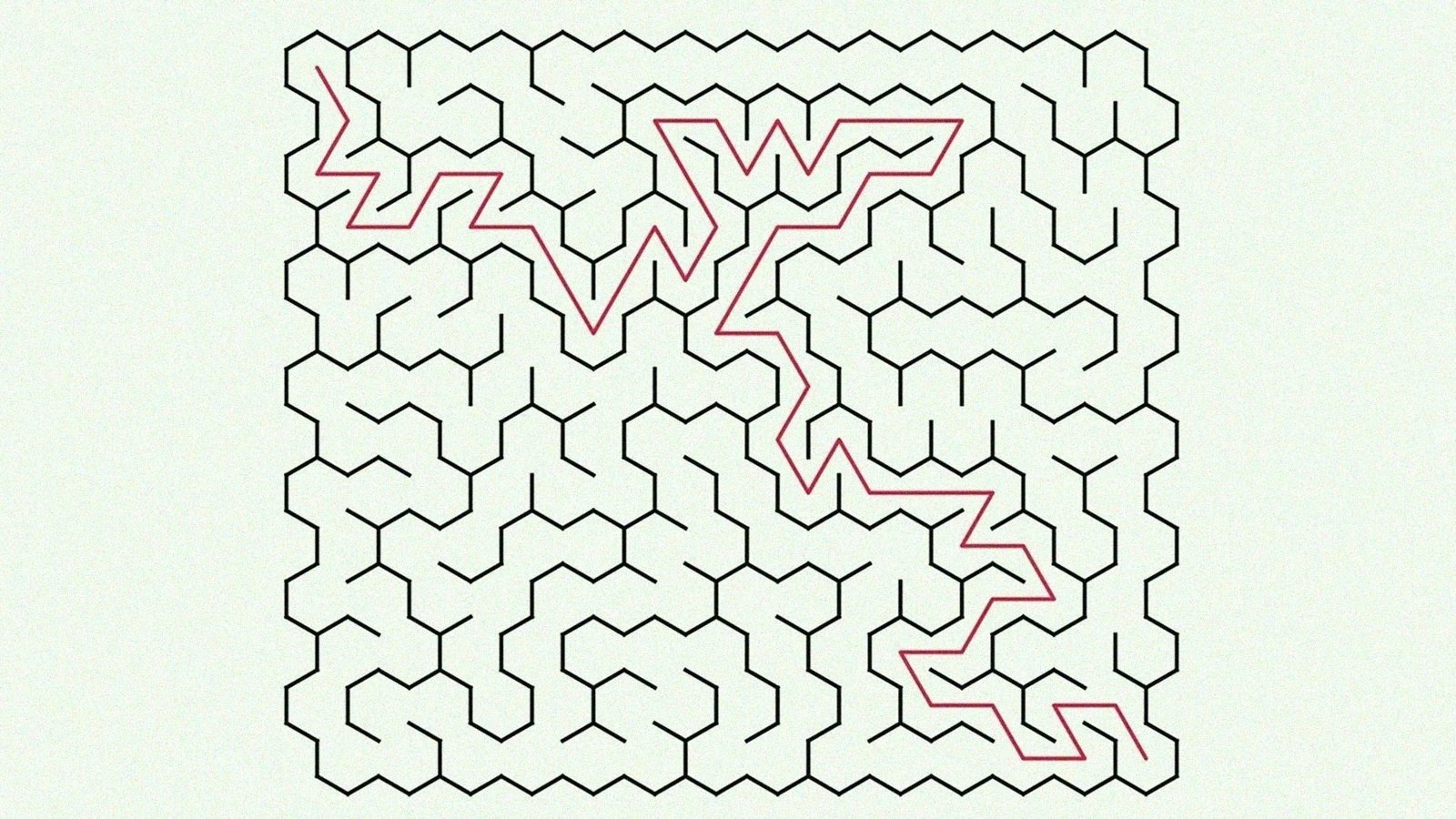
Our generated example. Made with the Maze Printables maze generator; this is the same medium sample used in our shape comparison, with its solution path shown in pink.
9. weave mazes
Paths cross over and under each other like highway interchanges, so a wall you thought you'd mapped turns out to pass beneath your route two corridors later. It's the paper version of those raised bridges in big estate hedge mazes like Longleat, which we covered in famous mazes around the world.
Hard to find in books, worth the hunt when you do. The overpass illusion never really stops being sneaky.
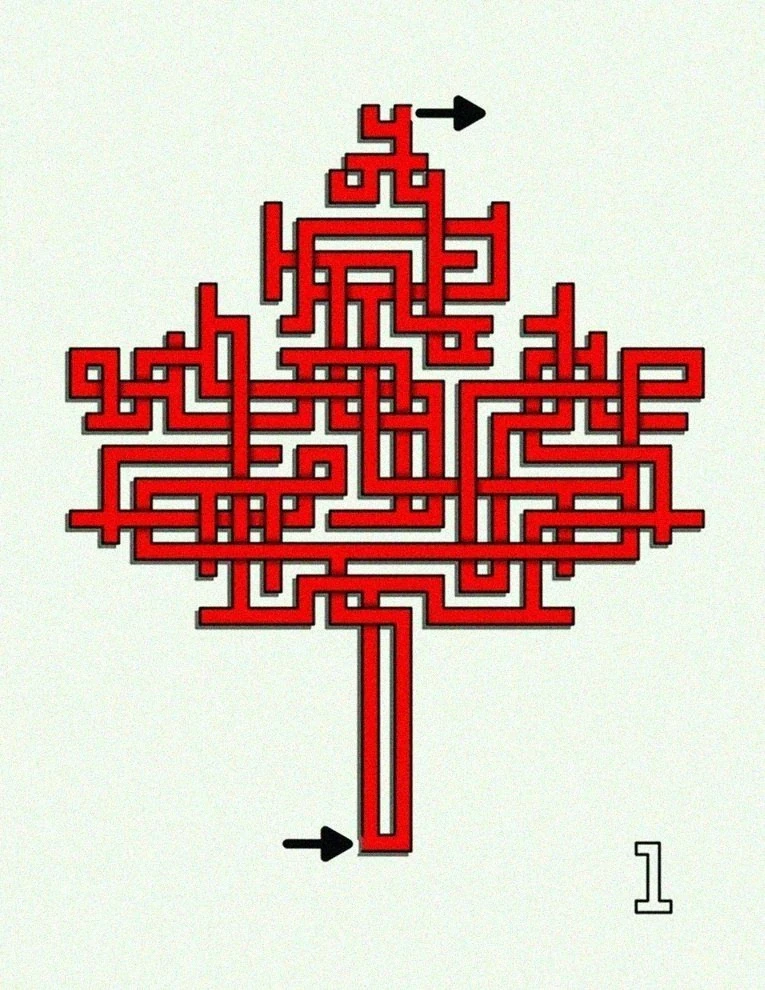
Real weaving maze. Source:
DoyouMaze's Weaving Mazes collection
.
how hard is each one, really
Difficulty depends on who's solving, so treat this as one household's field notes.
| Variation | What it attacks | Who struggles most |
|---|---|---|
| Area maze | Assuming drawings are honest | Adults who "were good at geometry" |
| Word maze | Skimming instead of reading | Fast solvers |
| Number maze | Mental arithmetic under pressure | Anyone doing it before coffee |
| Logic maze | Planning several moves ahead | Everyone, at first |
| Arrow maze | Route planning | Directionally confident people |
| Tilt maze | Counting moves over distance | Experienced maze solvers, humiliatingly |
| Circular maze | Landmarks and orientation | Grid-trained solvers |
| Hex maze | Junction overload | People who rely on wall-following |
| Weave maze | Spatial memory | Me, specifically |
Notice the pattern. The more maze experience you have, the harder tilt and hex hit you, because they punish the habits that made you fast. Beginners sometimes do better on their first tilt maze than veterans do.
If you want the technical version of what makes any maze hard, we broke the numbers down in how maze difficulty works, dead ends and junction counts included. And maze vs labyrinth clears up the one-path-versus-many-paths confusion that trips people at trivia night.
where to get more (and make your own)
- Our maze generator builds rectangular, circular, and hex mazes at whatever size you pick, and it prints clean on Letter or A4.
- Answer keys matter. Every pack on our site ships with one, because a brain teaser without a way to check yourself is homework. Browse the maze packs to pick a level and download its answer key.
- Webmazes for rule-based puzzles, with instructions and a difficulty rating for each maze.
- Your library. Puzzle books are the one genre libraries reliably stock and nobody checks out, which baffles me.
- For ready-made printables, adult printable mazes runs harder than the general collection, and hard printable mazes is the deep end.
faq
What are brain teaser puzzles?
Puzzles that resist the obvious approach. Instead of testing knowledge, they test whether you can hold a rule, spot a trick, or abandon a plan that stopped working. Every variation on this list qualifies, because each one disables a habit that ordinary mazes taught you.
Do mazes actually count as brain exercise?
In the same way a walk counts as exercise, yes, with honest limits. Solving puzzles keeps you engaged, focused, and off your phone for twenty minutes, and that has real value. The bigger claims you'll read about puzzles preventing cognitive decline run ahead of the evidence, at least as I understand the research. Do them because they're absorbing. The rest is a maybe.
Where can I find brain teaser puzzles with answers?
Our printable packs all include answer keys, and the word and number mazes on worksheet sites usually publish solutions on a separate page. For area mazes, The Original Area Mazes has full worked solutions in the back, which you'll appreciate around puzzle six.
What is the hardest type of maze?
For paper mazes, our generator data says hex layouts produce the twistiest solution paths on average. For human suffering, logic mazes win, because an extra rule can make a tiny grid unsolvable-by-habit. Weave mazes get an honorable mention for pure spatial rudeness.
Are these okay for kids?
Everything here is family-table material. Word mazes, number mazes, and arrow mazes work from about age seven up, and tilt mazes are ageless if you buy the wooden kind. Logic mazes and the harder hex prints, I'd save for teens and adults, or very stubborn ten-year-olds.
next step
Pick one variation tonight, the one that sounded mildly annoying. That's usually the right one.
- Print something twisty from hex mazes or circular mazes.
- Build your own with the maze generator, sized to your patience.
- Want the ordinary kind, done well? Hard printable mazes will keep you busy.
- More reading: how maze difficulty works and maze solving algorithms, for when you want the math behind the flailing.
Sources and further reading: