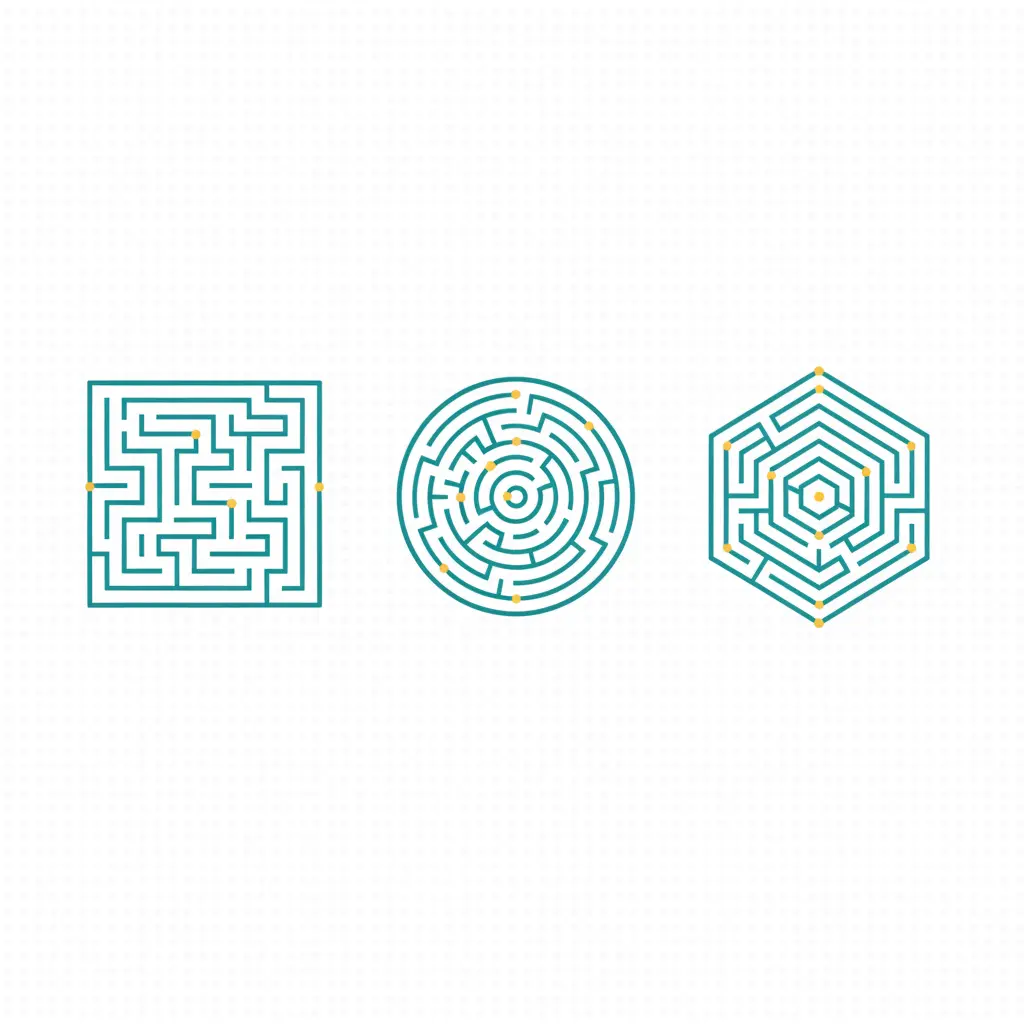
Maze shape changes the feel more than most people expect. A rectangular maze reads like a map. A circular maze reads like a target. A hex maze reads like a woven grid.
This guide helps you choose a shape based on what you want: a clean worksheet, a different solving vibe, or a tougher visual challenge. You can browse by shape on Maze Forge: rectangular, circular, or hex.
quick links
- Shape hubs: rectangular, circular, hex
- Start easy: easy rectangular
- Make your own: maze generator
- Size guide: maze sizes explained
rectangular mazes: the worksheet default
Rectangular mazes are the cleanest pick for:
- classrooms
- quick warm-ups
- younger solvers
They are easy to scan because your eyes move left to right and top to bottom. Printing is also straightforward because the maze fits naturally on Letter and A4.
If you want a fast stack, start with easy rectangular mazes or download the Easy Starters Pack.
circular mazes: different scanning, different fun
Circular mazes feel different because the path wraps around a center. Many solvers scan in arcs instead of rows.
Circular mazes work well when:
- you want variety without changing difficulty level
- you want a puzzle that feels less like a worksheet
- you are printing for a puzzle night or a themed activity
Printing note: circular layouts can make margins feel tighter. Print at 100% scale and check for clipping.
hex mazes: dense and "woven"
Hex mazes often feel dense because of how the grid connects. Even when the difficulty label matches, hex can feel more intense because there are more angles to track.
Hex mazes work well when:
- you want a harder visual challenge
- you want a maze that feels less predictable
- you are solving online and want a different style
If you print hex mazes for kids, start smaller and keep corridor clarity in mind. This guide helps: maze sizes explained.
quick pick table
| What you want | Pick | Why |
|---|---|---|
| Clean classroom worksheet | Rectangular | Easiest to scan and print. |
| "Something different" without chaos | Circular | New feel with familiar rules. |
| A denser visual challenge | Hex | More angles and a woven look. |
how to pick a shape for your audience
for teachers
Start with rectangular for consistency. Add circular as a reward variation once the routine is stable.
If you are running a warm-up routine, this post helps: maze warm-ups for class.
for kids at home
Pick the shape that keeps it fun. If rectangular feels like schoolwork, circular can make it feel like a game.
If your kid gets stuck often, use this coaching guide: help kids when they get stuck.
for adults
If you solve often, rotate shapes. Rectangular is fast and clean. Circular changes scanning. Hex raises the visual challenge.
printing tips by shape
Two settings matter across shapes:
- Print at 100% scale.
- Adjust margins if edges clip.
If printing fights you, use the checklist here: print mazes without cropping.
a simple shape progression (use variety without changing everything)
If you want to keep mazes fresh without constantly changing difficulty, rotate shape first, then rotate level.
One smooth progression:
- Start with rectangular at your base difficulty.
- Add circular at the same difficulty for variety.
- Try hex at the same difficulty for a denser visual challenge.
- Move up one difficulty level after the shape rotation feels comfortable.
This keeps the "rules" familiar while changing the scanning pattern, which is often enough to keep students and puzzle fans engaged.
FAQ
can I generate circular or hex mazes too?
Yes. Pick the shape in the maze generator.
which shape is hardest?
There is no universal answer. Hex can feel harder because of the angles. Difficulty also depends on maze structure, not only shape.
which shape prints best?
Rectangular is the safest default. Circular and hex print well too, but pay attention to margins and scale.
next step
- Want the simplest start? Browse easy rectangular mazes.
- Want a different feel? Try circular mazes or hex mazes.
- Want a custom shape and size? Open the maze generator.